Menhaden: The Most Important Fish in the Chesapeake Bay
Here's a fish you'll probably never eat, never catch on purpose, and never see on a menu — and yet it may be the single most important fish in the Chesapeake Bay. Menhaden, known to watermen as "bunker," are small, oily, and easy to overlook, but nearly everything you love watching out here — the diving ospreys, the striking rockfish, even the dolphins — is, in a sense, watching them. Learn to read a menhaden school and you'll start to see the whole Bay food web in motion.
"The most important fish in the sea"
That grand title isn't marketing — it's the name of a well-known book about menhaden, and it stuck because it's fair. Menhaden are a forage fish: they don't sit at the top of the food chain, they hold it up from below. Along the Atlantic coast they form the broad base that countless larger animals feed on, and in the Chesapeake in particular they're a staple in the diets of striped bass and other gamefish, and a critical food for ospreys, bald eagles, herons, egrets, gannets, pelicans, and more. Pull menhaden out of the picture and the whole structure above them wobbles.
Nature's water filter
Menhaden earn their keep at both ends. As filter feeders, adults swim with their mouths open, straining tiny plankton from the water — turning drifting algae into fish flesh that predators can use. That makes them a living link between the Bay's microscopic productivity and its big, charismatic animals: sunlight becomes plankton, plankton becomes menhaden, and menhaden become osprey chicks and rockfish. Few animals in the estuary do more quiet, essential work.
How to read a school: birds mean life
Once you know menhaden are there, the Bay starts telling you where. The classic sign is a sudden commotion of diving birds — gulls, terns, ospreys, sometimes pelicans — wheeling and plunging over one patch of water. That frenzy usually means a school of menhaden has been driven to the surface, often by predatory fish attacking from below. Watch for:
- Birds working a tight patch of water, diving over and over in the same spot.
- A dark, shifting stain or nervous ripple on an otherwise calm surface — a dense school just below.
- Splashes and swirls as rockfish or bluefish slash into the bait from underneath.
Anglers use exactly these clues to find feeding gamefish. For the rest of us, a bird blitz over the water is simply a front-row seat to the Bay feeding itself.
Watch the Bay come alive
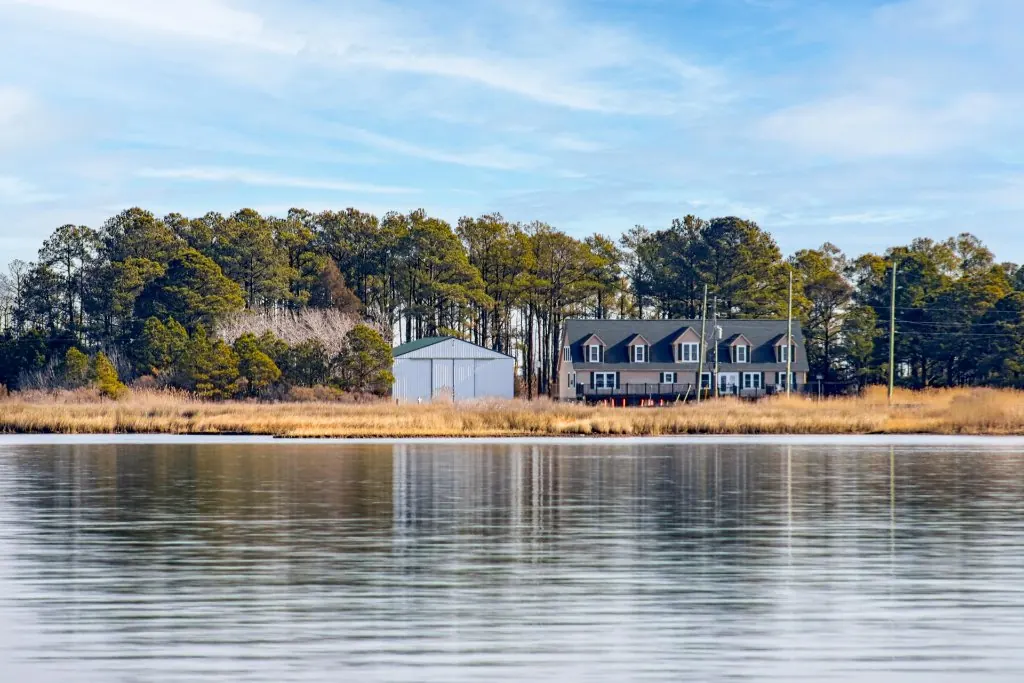
From the front deck and bay-view windows at The Bayside Escape in Fishing Creek, MD, a diving flock over the water is a common sight. Bring binoculars. Create a free account and get $100 toward your first direct booking.
Why menhaden are worth caring about
Because so much depends on them, menhaden are also one of the most watched and debated fish on the coast. They're harvested in large numbers for bait and for products like fish oil and animal feed, which raises an ongoing question: how many can be taken before the ospreys and rockfish that rely on them go hungry? Researchers have even linked struggles in some osprey nests to shortages of menhaden. You don't need to referee that debate to appreciate the point — the health of the little fish quietly sets the ceiling for the big ones. When menhaden thrive, the Bay you came to watch thrives with them.
The next time you see a blitz
So keep an eye on the water. When the birds suddenly gather and start dropping from the sky, don't just admire the birds — think about the humble, silvery multitude beneath them that made the whole scene possible. It's one of the best free lessons the Chesapeake gives away: that the smallest fish is holding up the biggest show.