King Tides on a Low-Lying Island: What to Expect
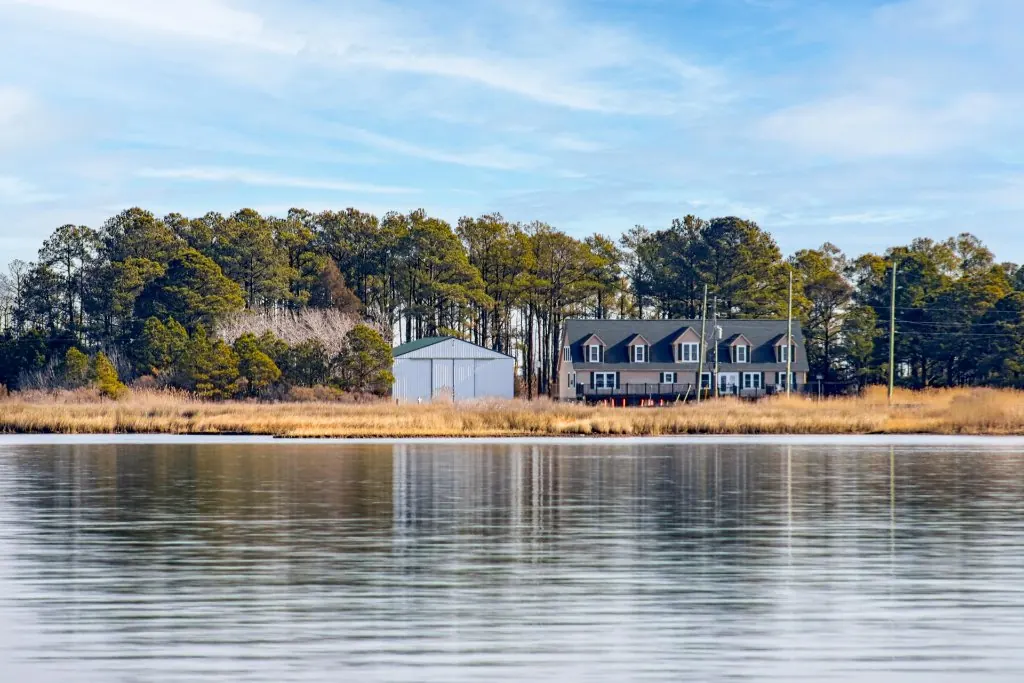
Hooper's Island is a low, narrow place at the edge of the Chesapeake, and part of visiting a landscape like this is understanding its rhythms. Now and then — usually a few times a year, on the highest tides — a low spot in a road out here can briefly hold water, even on a bright, calm day. It sounds dramatic if you've never encountered it, but it's a normal, well-understood part of life on the Bay's edge. This guide explains what's going on, calmly and honestly, so you arrive knowing what to expect and how little it usually affects a stay.
First, what tides even are
Tides are the slow, daily rise and fall of the sea, driven by the gravitational pull of the moon and sun. The Chesapeake is a tidal estuary, so its water level breathes in and out through the day — higher, then lower, then higher again. Most of the time this is gentle and barely noticeable from the house; you'll see it more clearly if you're crabbing or launching a boat, when the water's height genuinely matters. The tide is simply the pulse of the Bay, and learning to read it is one of the small satisfactions of a waterside trip.
So what's a “king tide”?
A "king tide" is an informal name for the highest tides of the year. They happen when the sun, moon, and Earth line up just right and the moon is at its closest, adding their gravitational tugs together to pull the water a little higher than usual. King tides aren't a storm or an emergency — they're predictable astronomy, marked on tide calendars in advance. They occur only a handful of times a year and last for a day or two around those peak alignments. On most days of most trips, you'll never encounter one at all.
Why a road might puddle on a sunny day
Because Hooper's Island sits so low and flat, the very highest tides can occasionally push water up over the lowest edges of a road or lawn — briefly. You may hear this called "nuisance flooding" or "sunny-day flooding," precisely because it can happen with blue sky overhead and no rain in sight; it's the tide, not the weather. When it happens, it's typically shallow and short-lived: the water rises with the peak of the tide and then drains right back off as the tide turns and falls, often within a couple of hours. It's the kind of thing longtime islanders take entirely in stride, and it's a normal feature of living at the water's edge.
What this means for your trip (usually very little)
For the vast majority of stays, king tides are a non-event — an interesting bit of local knowledge more than a practical concern. Still, a little awareness makes any visit smoother:
- Check a tide chart for your dates. Free tide tables and apps show the day's highs and lows for the area. If your stay happens to overlap an especially high tide, you'll simply know in advance.
- Give a puddled low spot a minute. If you ever meet standing water on a road, the calm move is to wait for the tide to fall rather than push through water of unknown depth — it usually recedes before long.
- Build in a little buffer for time-sensitive plans. If you have a ferry, a reservation, or a flight, a small time cushion covers the rare occasion when you'd rather let a high tide pass.
- Watch the weather, not just the calendar. The highest water tends to come when a king tide lines up with a strong onshore wind or a passing storm, so keep an eye on the forecast alongside the tide chart.
Get $100 toward your first booking
Create a free Bayside Rewards account and we'll drop $100 toward your first direct booking — sign in when you check out and the $100 comes off there. Then earn 8% back on every stay after that.
A feature of the place, not a flaw
It's worth saying plainly: the very qualities that make Hooper's Island special — low, open, ringed by water and marsh, close enough to the Bay to feel it in your bones — are the same ones that make it tidal. The wide water views, the birdlife, the crabbing, the sunsets that seem to go on forever: all of it comes from being right at the edge of a living estuary. The occasional high tide is simply the Bay reminding you where you are. Understanding that rhythm, and respecting it, is part of what it means to visit a real working island rather than a manicured resort.
Come ready, relax into it
None of this should give a traveler pause — think of it the way you'd think of checking the surf report at the beach or the snow report in the mountains. Glance at a tide chart, keep an eye on the forecast, pack for the season, and then settle in and enjoy the water for the gift it is. The rhythm of the tides is one of the quiet pleasures of a Chesapeake stay, and knowing how to read it only makes the trip richer.