How to Host a Maryland Crab Feast at Your Rental: Steaming, Seasoning & Setup
A Maryland crab feast isn't a meal so much as an event — a steaming pot, a table buried in newspaper, a tin of Old Bay, a stack of mallets, and a few hours of nobody being in a hurry. It's the single most quintessential thing you can do on the Chesapeake Bay, and it's far easier to pull off yourself than most visitors think. Here's exactly how to buy, steam, season, and serve a proper feast — and how to set it up for a big group.

First, the one rule: steam, don't boil
In a lot of the country, people boil crabs. In Maryland, we steam them — and locals will tell you it makes all the difference. Steaming cooks the crab in seasoned vapor instead of waterlogging the meat, so the flavor concentrates and the Old Bay clings to the shell instead of washing away. It's the method every crab house on the Eastern Shore uses, and it's the method you'll use too.
Everything below assumes a steam, not a boil. You'll need a big stock pot with a lid and a rack or steamer insert that keeps the crabs up out of the liquid.
How many crabs to buy — and where to get them
Blue crabs are sold by the dozen and graded by size — smalls, mediums, larges, and the prized jumbos (often labeled #1 males, or "jimmies"). For planning, a hungry adult who's there to eat crabs and not much else will go through a dozen; a more typical eater working through crabs plus sides lands closer to a half-dozen. A safe rule of thumb is 6 to 12 crabs per adult depending on size, appetite, and how many sides you put out. Buy a mix of sizes if you're feeding a crowd — the bigger ones are the showpieces, the mediums fill the table.
The best part of doing a feast on Hooper's Island is that you're buying crabs about as close to the source as it gets. Rippons Brothers Seafood is roughly two miles from The Bayside Escape, and the surrounding waters are working crab grounds — this is one of the most productive blue-crab regions on the entire Bay. Buy them live and cook them the same day; call ahead during peak season (July through September) since the best catch moves fast. Maryland's recreational crab season runs April 1 through December 15, so a feast is on the menu most of the year.
What you'll need
- A large stock pot with a lid and a steaming rack or insert (something to keep the crabs above the liquid).
- Beer, water, and vinegar — apple cider or white. The vinegar is the secret: it helps the meat release cleanly from the shell.
- Old Bay or J.O. seasoning — and more than you think. A feast is not the time to be shy.
- Tongs for layering and pulling crabs (they're live going in — handle with the tongs).
- Mallets and a knife or two for picking, plus plenty of paper towels.
- Newspaper or brown kraft paper to cover the table — this is the traditional (and practical) move; cleanup is just rolling it all up.
- Melted butter, vinegar for dipping, lemon, and cold drinks.
The steaming method, step by step
- Build the liquid. Pour roughly equal parts beer, water, and vinegar into the pot — just enough to sit below the rack so the crabs steam rather than boil. Bring it to a hard, rolling boil.
- Layer and season. Using tongs, lay a single layer of live crabs on the rack, then sprinkle generously with Old Bay. Add another layer, season again, and repeat — up to three or four layers, seasoning every one heavily. Resist stacking more than four; the top layer needs steam to reach it.
- Cover and steam. Put the lid on and let them go until every crab is a uniform bright red-orange. That's roughly 10 minutes for a single layer of large crabs and up to 25–30 minutes for a full, packed pot. Color is the real signal — a crab that's still mottled or greenish needs more time.
- Rest, then dump. Let them sit a couple of minutes, then turn them out onto the newspaper-covered table. Serve hot, with melted butter and a little vinegar for dipping.
A note on the crabs
Cook crabs that are alive and lively right up until they go in the pot; discard any that have died beforehand. If you're buying them already steamed from a local seafood market, you can skip straight to the picking — many visitors do exactly that.
How to pick a crab (the part everyone fumbles the first time)
Picking is a learned skill, and half the fun of a feast is the table coaching the newcomers. The short version: flip the crab, pull off the apron (the tab on the belly), then pop off the top shell. Clean out the gills (the feathery "devil's fingers") and the guts, snap the body in half, and work the sweet lump meat out of the chambers. The claws get cracked with a mallet. Nobody is fast at first — that's the point. Give it three or four crabs and it clicks.
The sides that make it a feast
Crabs are the main event, but the supporting cast matters. The Eastern Shore classics: sweet corn on the cob, a tomato-and-cucumber salad, hush puppies or cornbread, coleslaw, and plenty of cold drinks. Keep it simple — when the table is covered in crabs, nobody wants a complicated menu competing for attention. Save room and plan for the meal to run long; a crab feast is meant to be lingered over.
The house built for a crab feast
The Bayside Escape sleeps 24 on the Chesapeake Bay in Fishing Creek, MD — big decks, an outdoor table, and fresh crabs about two miles away. Create a free account and get $100 toward your first direct booking.
Setting it up for a big group
A crab feast scales beautifully — it's genuinely better with twenty people than with four. What it needs is space: a long table you can cover and crowd around, an outdoor area where the mess doesn't matter, and a kitchen big enough to run a steamer pot (or two) while everything else comes together.
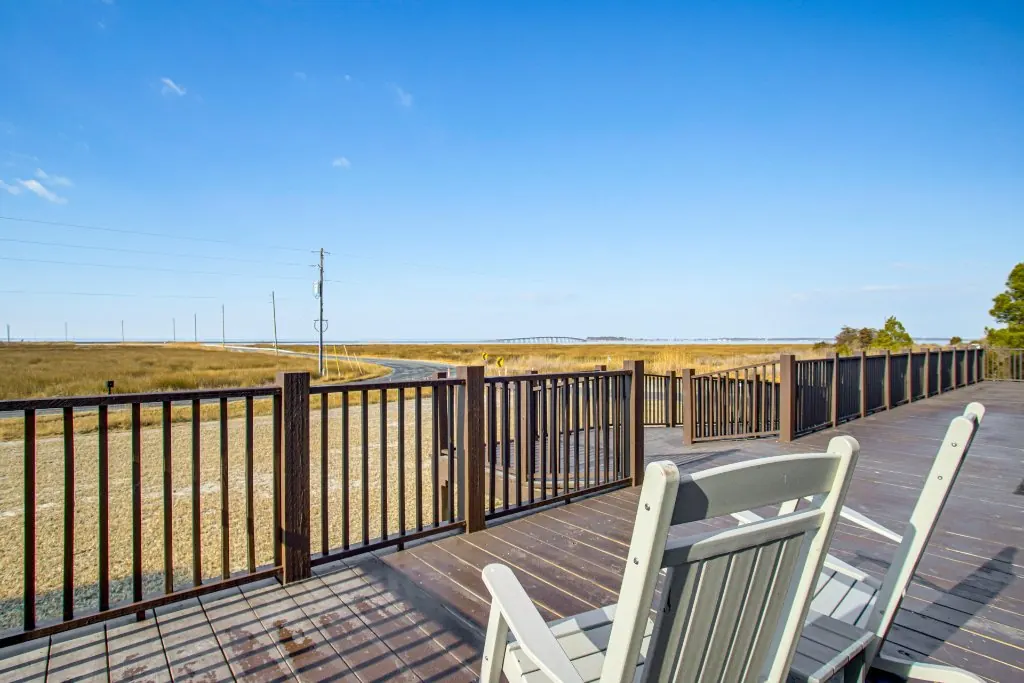
That's exactly what The Bayside Escape is built for. The house sleeps 24 across six bedrooms and five queen sofa-sleepers, the decks and backyard give you room to spread out a proper feast with water views the whole time, and you're minutes from the boat ramp and the seafood markets that supply the crabs. Pair a feast night with a morning of crabbing from the shoreline across the road or a charter on the Bay, and you've got the whole Chesapeake experience.
Planning a crab feast weekend?
Check the calendar and lock in your dates — crab season runs April through mid-December, and summer weekends fill first.
Check Availability
Common first-feast mistakes
- Boiling instead of steaming. Keep the liquid below the rack. Waterlogged crab is sad crab.
- Under-seasoning. Season every single layer, heavily. The Old Bay is half the experience.
- Going by the clock instead of the color. Bright red-orange, all over, is done. Anything less needs more steam.
- Not buying enough. People always eat more crabs than they expect. Round up.
- Forgetting the table cover. Newspaper isn't nostalgia — it's the cleanup plan.
Quantities and timing are guidelines — crab size, pot size, and stove power all shift the numbers, so trust the color and taste as you go.