Do You Need a License to Go Crabbing in Maryland? A Plain-English Guide
You're staying on Hooper's Island, the Bay is right there, and someone in your group suggests grabbing a chicken neck and a drop line. Do you need a license? The short answer: it depends on how you're crabbing. Here's what you need to know before you head out — and why it's always worth a quick check with Maryland DNR before your trip.
When Is Crabbing Season in Maryland?
Maryland's recreational blue crab season generally runs from April through mid-December, with the peak window falling between July and September. Water temperature is the real driver — blue crabs become active when Bay temps climb above roughly 50°F, and they're at their most catchable in the 70–80°F range that defines a proper Eastern Shore summer.
April–June
Early Season
Crabs waking up, less competition
July–Sept
Peak Season
Best numbers, ideal water temps
Oct–mid Dec
Late Season
Crabs fattening up, still worth it
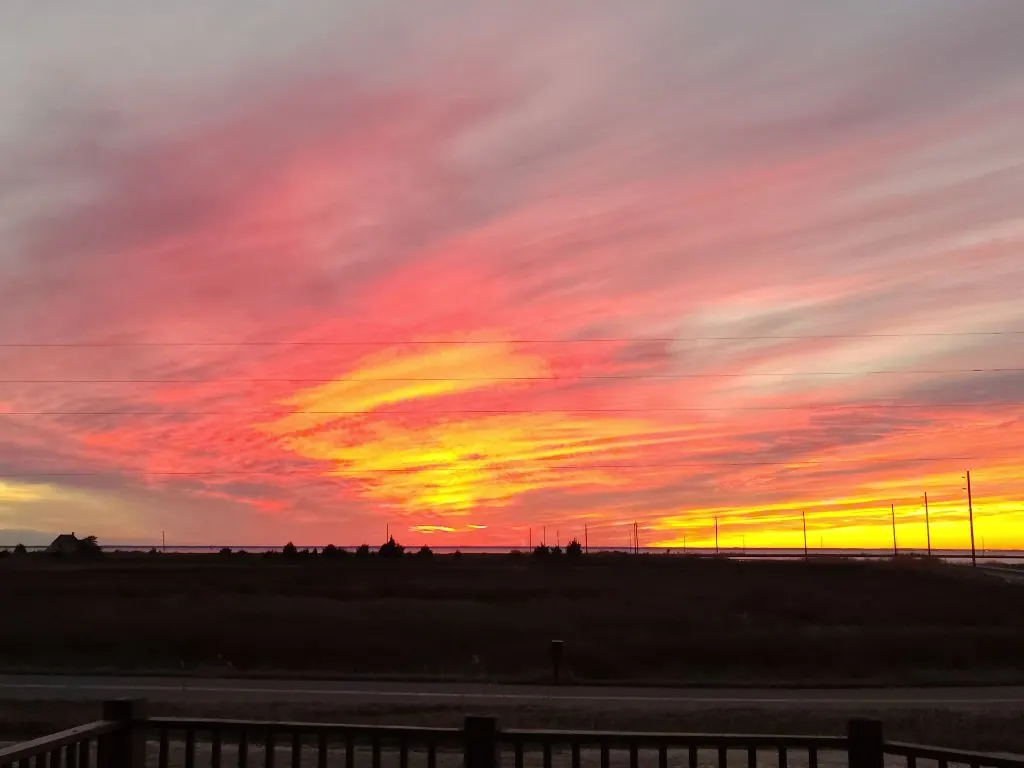
From The Bayside Escape, the Chesapeake Bay shoreline is a short walk across a quiet road. During peak season, you can see and hear the water from the property — and the crabs are out there.
The Big Question: Do You Need a License?
Maryland's recreational crabbing rules draw a meaningful distinction between casual hand-line crabbing and more involved methods. Here's the plain-English version — but treat this as a starting point, not legal advice. Rules change, and you should always confirm current requirements at dnr.maryland.gov before you go out.
What needs no license at all: a handline or a dip net
- Dip nets, and any number of handlines — a baited drop line — used from a shoreline, a bridge, a pier, a dock or a boat
- Any day of the week, 24 hours a day
- Up to 2 dozen male hard crabs, plus 1 dozen soft crabs or male peelers (or a mix of those two), per person per day
Two things worth being plain about. Where you live makes no difference: there is no resident-only condition on this, so an out-of-state visitor with a string and a chicken neck needs no license either. And that catch limit is not a footnote, it is the exemption — go past it and you need a license, handline or not.
What does need a Maryland Recreational Crabbing License
- Collapsible traps and star traps — any number of them, including the ones in the Flex Barn here
- Crab net rings
- Trotlines
- Seines
- Eel pots used to catch your own bait
$5 for a Maryland resident, $10 if you live out of state, or $15 for a Recreational Crabbing Boat License, which covers the people crabbing aboard that boat instead of licensing each one. Good for 365 days from the day you buy it, online at mdoutdoors.maryland.gov. Under-16s need no license to use a handline or a dip net.
Crab pots are a separate thing, and not an option here
A crab pot is neither licensed nor license-free — it runs on its own free registration, and it is not something you can do from here. Maryland only lets a private waterfront property owner, or their tenant or guest, set a pot, two per property — and the shoreline across the road from us is public, so nobody in your group can set one there. The registration also does not carry a crabbing license with it, so it would not cover a collapsible trap either.
Bottom line for most groups: a chicken neck on a string, dropped from the shoreline across the road, needs no license from anybody, wherever you live — and it is what nearly every group here actually does. Keep it to two dozen male hard crabs a person a day and you are inside the exemption. The moment somebody reaches for a collapsible trap, a net ring or a trotline, that person needs the license first: five minutes online before you travel. Two rules that catch people out either way — males only, and any female carrying eggs always goes back; and the minimum size for a male hard crab steps up from 5 inches to 5¼ inches on 15 July, measured point to point across the shell, which is exactly when the crabbing gets good.
Gear Basics: What You Actually Need
For a relaxed afternoon of hand-line crabbing from the shoreline across the road, the setup is refreshingly simple:
- Drop line or hand line — 20–30 feet of heavy cotton string works well; crab lines are sold pre-rigged
- Bait — raw chicken necks are the classic Eastern Shore choice; chicken thighs and fish heads also work
- Long-handled dip net — 4–5 feet; you'll want it to scoop from below without spooking the crab
- A bucket or basket — to hold your catch while you keep going
- Gloves — blue crabs have a grip that will surprise you
Rippons Brothers Seafood, about 2 miles from The Bayside Escape, sells bait, drop lines, nets, and gear. The staff there will tell you what's working right now and exactly where to go. They've been at it for a long time.
Get $100 toward your first booking
Create a free Bayside Rewards account and we'll drop $100 toward your first direct booking — sign in when you check out and the $100 comes off there. Then earn 8% back on every stay after that.
The Hand-Line Technique: Go Slow
The mechanics are simple — the patience is the skill. Tie your bait securely to one end of the line, lower it slowly into the water, and wait. When you feel resistance or the line goes taut, resist the urge to yank it up. Blue crabs are tenacious feeders but skittish in motion.
The move: slowly, smoothly raise the line while your partner slides the dip net into the water below the crab — coming from underneath so the crab doesn't see it coming. The moment you scoop, pull the net straight up in one motion. Speed matters at the end, but not a second before.
If the crab drops — and it will, at least a few times — just lower the line back down. They come back.
Best Tides and Times of Day
Crabs don't follow a strict schedule, but conditions make a real difference. A few things that tend to hold true on the Bay:
- Moving water is better than slack water. Crabs are more active when the tide is flowing — incoming or outgoing both work, but the first two hours of an incoming tide are often especially productive.
- Early morning and late afternoon are generally better than midday in peak summer. Crabs feed more aggressively when water temps are slightly lower.
- Overcast days can be surprisingly good — crabs seem less cautious when the sun isn't overhead.
- After a rain sometimes triggers feeding activity, though very heavy runoff can temporarily reduce salinity and slow things down.
You can check tide charts for the Hooper's Island area at NOAA's tides-and-currents site. Look up the station closest to Fishing Creek or Hooper's Island for accurate local timing.
Size Limits and Putting Females Back
Maryland sets a minimum size limit for keeper crabs — measured point-to-point across the shell. Always confirm the current minimum with Maryland DNR before you go, as size limits are subject to change based on population surveys and conservation decisions.
Beyond the legal minimums, there's a widely observed local practice: throw back sponge crabs — females carrying an egg mass (the sponge) on their underside. That sponge can hold hundreds of thousands of eggs. Releasing sponge females is not just a courtesy; in many cases it's required by regulation. Either way, it's the right call for the Bay.
How to tell: flip the crab over. Females have a broader, rounder apron (the flap on the underside). A sponge crab will have a visible orange or brown egg mass attached beneath the apron. When in doubt, let it go.
What to Check Before You Go
Maryland DNR updates recreational crabbing regulations periodically based on stock assessments, and the rules genuinely do change from year to year. Before your trip, verify these specifics at dnr.maryland.gov:
- Whether your specific method and gear type requires a recreational crabbing license
- Current daily limits per person
- Current minimum size requirements
- Any seasonal closures or special rules for the waters near Hooper's Island
- License fee and where to purchase (online, bait shops, sporting goods stores)
You can also pick up current regulation summaries at Rippons Brothers Seafood — they keep them on hand and are used to answering exactly these questions from visitors.
Coming Back to the House with Your Catch
Half the fun is what happens after. If you come back to The Bayside Escape with a bucket of crabs, you've got a big kitchen and a group ready for a proper crab feast. The setup:
- A large steamer pot with a rack — available at Rippons Brothers Seafood if you don't have one
- Liquid in the pot — about an inch of water and an inch of apple cider vinegar or beer
- Old Bay — heavily applied in layers as you stack the crabs
- Steam for 20–25 minutes after the pot comes to a full boil, until the shells are bright orange
- Newspaper on the table, mallets, picks, cold drinks — the whole production
If your catch is light, Rippons Brothers Seafood is 2 miles away and sells live crabs, steamed crabs, and fresh local seafood. You're not going home hungry.
Get $100 toward your first booking
Create a free Bayside Rewards account and we'll drop $100 toward your first direct booking — sign in when you check out and the $100 comes off there. Then earn 8% back on every stay after that.