Lighthouses & Photography Spots of the Lower Eastern Shore
The lower Eastern Shore of Maryland is one of the most quietly photogenic corners of the mid-Atlantic. There are no dramatic mountains or famous skylines — instead there is a horizontal landscape of marsh, water, and sky that rewards patience and good light more than spectacle. An offshore lighthouse standing in open Bay, working boats against a pink dawn, and the vast tidal marshes of Blackwater catching the last gold of the day are the kinds of images you come home with. Here is where to find them around Hooper's Island, and how to time the light.
Why the Lower Eastern Shore Photographs So Well
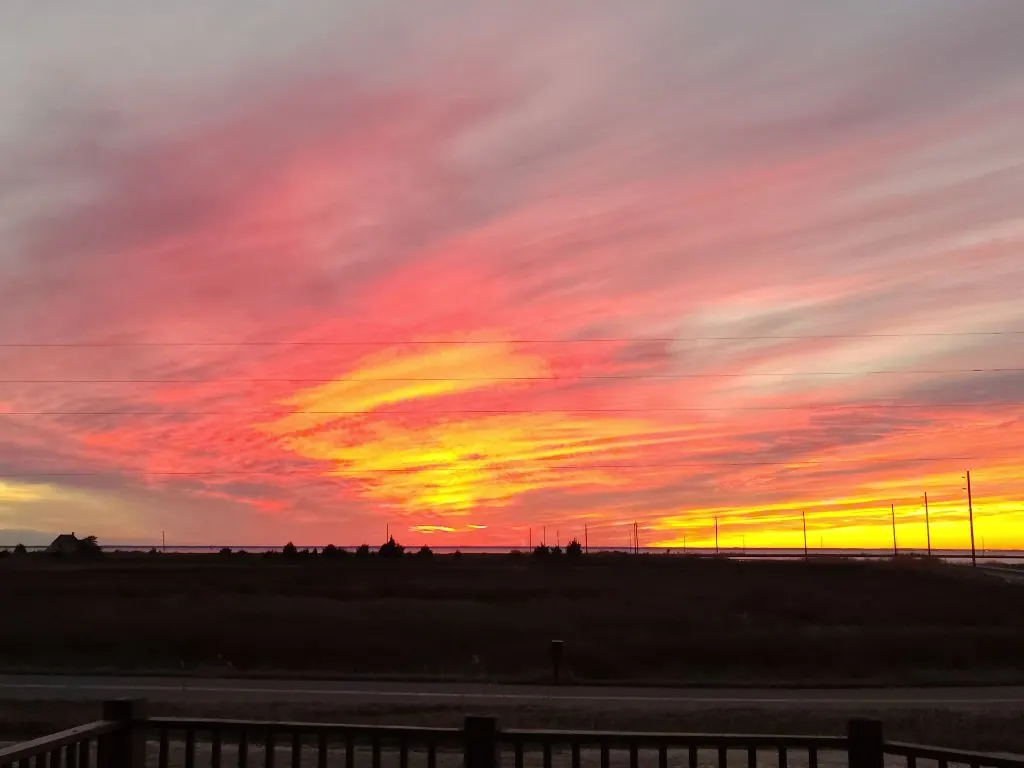
This is a landscape built almost entirely of horizontals — flat water, flat marsh, and an enormous sky that takes up most of the frame. That sounds like a limitation, but it is the opposite. A low, simple landscape means the sky does the heavy lifting, and the Chesapeake delivers extraordinary skies: long, slow sunrises and sunsets that paint the whole horizon, and big weather systems you can watch roll in from miles away across open water.
It also means reflections. Calm tidal water and shallow marsh ponds mirror the sky almost perfectly at dawn and dusk, doubling the color and giving you symmetry to compose around. Add the human element — a workboat, a duck blind, a stand of dead marsh trees, an offshore lighthouse — and a minimalist scene suddenly has a subject. The whole region rewards a photographer who is willing to get up early, stay out late, and let the light come to them.
The Hooper Island Lighthouse
The signature lighthouse of this stretch of Bay is the Hooper Island Lighthouse, which stands offshore in the open Chesapeake Bay off the lower islands. Unlike a classic land-based tower, it is a caisson lighthouse — built on a cylindrical foundation sunk into the Bay floor, with a distinctive conical tower rising from a cylindrical base out in the water. It is a quintessential Chesapeake light: isolated, weathered, and best appreciated from a distance across open water.
Because it sits offshore, the lighthouse is not something you walk up to. The most rewarding way to photograph it is with a telephoto lens from the shoreline of the lower islands, or — for the dedicated — from a boat or kayak on a calm day. A long lens compresses the scene, stacking the lighthouse against the horizon and any passing boats or weather. Early morning, with the sun rising behind or beside the structure and the water still flat, is the classic shot. Always check conditions and tides before heading out on the water, and keep a safe distance from the structure itself.
The lower Eastern Shore and the broader Bay are dotted with other historic screwpile-style and caisson lighthouses — the screwpile design, with its spider-leg pilings screwed into the soft Bay bottom, was a Chesapeake specialty. If lighthouses are a focus of your trip, it is worth researching which historic lights are accessible or visible from public shorelines and museums around the region before you arrive.
Blackwater National Wildlife Refuge
Roughly 19 miles from Hooper's Island, Blackwater National Wildlife Refuge is the photographic heart of the region. Its vast tidal marshes, open water, and "ghost forests" of standing dead trees create a landscape that changes completely with the light and the season. The refuge's Wildlife Drive is a slow, scenic loop with pull-offs that put you in position for both landscape and wildlife photography without leaving easy reach of your car.
Blackwater is famous for its bald eagles — it hosts one of the largest breeding populations on the East Coast — along with herons, egrets, ospreys, and, in the colder months, huge numbers of migrating waterfowl. For wildlife, a long telephoto (the longer the better) and patience are essential. For the marsh landscapes, the magic is the way the low sun rakes across the grass and lights up the water channels at the start and end of the day. Our full Blackwater National Wildlife Refuge guide covers the practical details of visiting — hours, the drive, and the trails.
Wake up to the shot — water views from the deck
The Bayside Escape sleeps 24 in Fishing Creek on Hooper's Island, with sunrise and sunset over the Chesapeake right from the deck. Create a free account and get $100 toward your first direct booking.
Working Boats & the Harbor
The working watermen culture of Hooper's Island is one of the richest photographic subjects in the area, and the harbors are the place to find it. Workboats leaving before dawn, crab pots stacked on the dock, weathered shanties, and the gear of the trade all make for strong, authentic images — and a single boat crossing a wide, calm Bay at first light is the kind of frame that defines the region.
Photograph the working waterfront with respect. These are people's workplaces and livelihoods, not a set. Shoot from public areas, keep clear of working boats and gear, and ask before photographing people closely. A friendly approach and genuine interest go much further than a long lens pointed without a word. For the deeper story behind these boats and harbors — the skipjacks, the crab houses, the seafood traditions — see our watermen heritage guide.
Golden Hour, Blue Hour & Timing the Light
In a landscape this flat and this dependent on sky, when you shoot matters more than almost anything else. Two windows do most of the work:
Golden Hour
- The hour after sunrise and the hour before sunset
- Warm, low, raking light that gives the marsh texture and depth
- Best for landscapes, working boats, and warm reflections
- Sunrise is calmest — least wind, glassiest water
Blue Hour
- The ~20–40 minutes before sunrise and after sunset
- Soft, even, cool light with deep blue tones
- Great for moody minimalist water-and-sky frames
- A tripod is essential for the longer exposures
A few practical points specific to this landscape: wind is your enemy and your friend. Calm mornings give mirror reflections; a breeze breaks them up but adds drama to clouds and water. Tides reshape the scene — low tide exposes mud flats and channels, high tide brings the water up into the grass — so a spot can look completely different from one visit to the next. And the wide horizon means the color show often happens behind you: at sunset, turn around, because the eastern sky frequently lights up just as beautifully as the west.
A Photographer's Gear Checklist for the Marsh
- A long telephoto for the offshore lighthouse and for eagles and other wildlife at Blackwater.
- A wide or standard lens for big-sky marsh landscapes and reflections.
- A sturdy tripod for blue-hour and long exposures — and a way to keep it from sinking in soft ground.
- Insect repellent. The marsh has mosquitoes and biting flies in the warm months; do not skip this.
- Layers and waterproof footwear. Dawn on the water is cold and damp even in summer.
- A polarizing filter to cut glare on water and deepen skies, and ND filters if you want silky water.
- Patience. The best frames here come to those who wait for the light, not those who chase it.
Planning a Photography Trip Around the Seasons
The lower Eastern Shore photographs well year-round, but the seasons offer very different subjects. Spring and fall bring migratory birds and comfortable conditions; summer delivers long days, lush green marsh, and dramatic afternoon storm clouds over the Bay; and winter is the time for huge concentrations of waterfowl at Blackwater, crisp air, and — if you are lucky — a skipjack working an oyster bar under sail. To match your trip to the light and the wildlife you want, our best time to visit the Chesapeake Bay guide breaks the year down month by month, and the complete guide to Hooper's Island ties together where to go and what to do once you arrive.
Wherever you point the lens, the lower Eastern Shore is a place that rewards slowing down. Stay a few days, learn the light, and let the marsh and the Bay show you what they look like at their best.