Watermen Heritage: Skipjacks, Crab Houses & Bay Culture on Hooper's Island
Hooper's Island is not a place that performs its history for visitors. It simply lives it. The skipjacks, the crab houses, the boats heading out before sunrise and the seafood that comes back at the end of the day are not heritage exhibits — they are the ongoing daily work of a Chesapeake Bay community that has made its living from the water for centuries. To stay in Fishing Creek is to stay inside one of the last working watermen cultures left on the Bay. Here is how to understand it, and how to experience it with the respect it deserves.
A Chain of Islands, a Community of Watermen
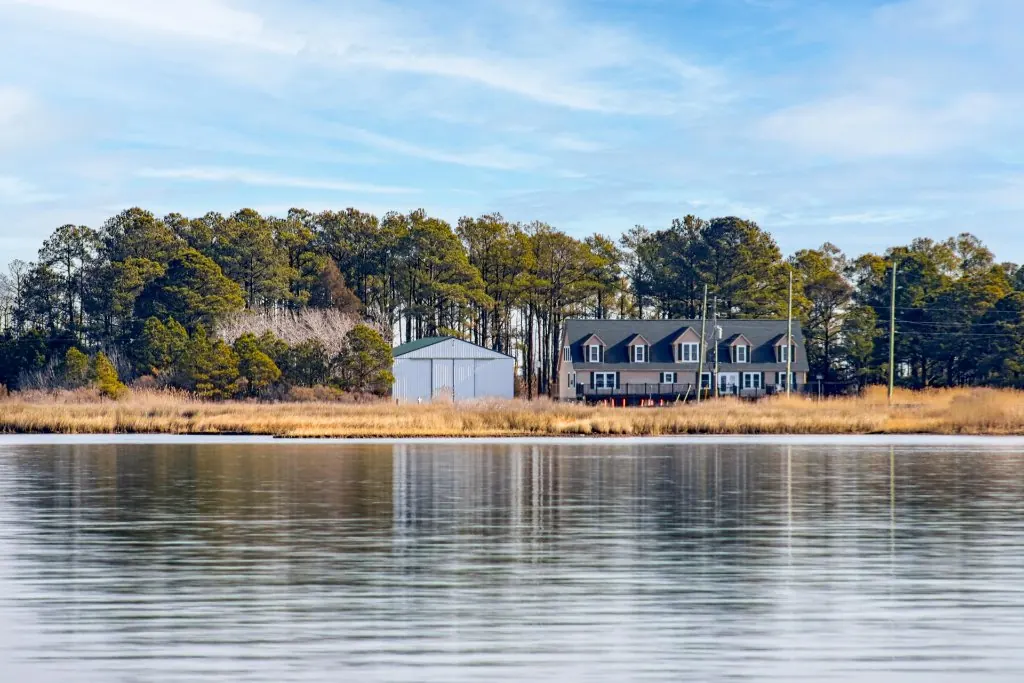
Hooper's Island is not one island but a chain of three — Upper, Middle, and Lower Hooper's Island — strung out into the Chesapeake Bay at the southwestern edge of Dorchester County, Maryland. The village of Fishing Creek sits on the upper islands, and a narrow ribbon of road connects the communities across the marsh and water. People have lived and worked here for generations, and what they have always done is harvest the Bay.
The word that defines this place is waterman — the Chesapeake term for someone who makes their living from the Bay's wild seafood. Watermen are not commercial fishermen in the industrial sense. They work small boats, often alone or with one mate, following a seasonal calendar that has barely changed in a hundred years: oysters in the cold months, crabs in the warm ones, and fish whenever the season and the weather allow. It is hard, weather-dependent, independent work, and the people who do it carry a deep, practical knowledge of the water that no outsider can fully match.
That heritage is woven into the geography itself. The harbors, the boat ramps, the crab shanties, and the houses built close to the shoreline all exist because of the Bay's harvest. When you stand on the deck at The Bayside Escape and watch a workboat cross the water at first light, you are watching the same scene that has played out here every working morning for generations.
The Skipjack: Maryland's Working Sailboat
No single object captures Chesapeake watermen culture like the skipjack. These are traditional wooden sailing vessels — single-masted, broad-beamed, with a distinctive sharply raked mast and a long bowsprit — built specifically to dredge for oysters under sail. The skipjack is the official state boat of Maryland, and it is one of the last working sailing fleets in the United States.
Their existence is partly an accident of regulation. For much of the twentieth century, Maryland law restricted oyster dredging to boats under sail on most days, a conservation measure meant to keep the harvest sustainable by limiting how much any one boat could take. That rule preserved the skipjack long after engines had replaced sail nearly everywhere else. The boats that survive today — fewer every year, lovingly maintained — are genuine working artifacts, not reproductions.
A skipjack under full sail on a gray winter Bay, dredging across an oyster bar, is one of the most striking sights in American maritime culture. If you visit during oyster season and have a chance to see one working, take it. And if you are interested in the boats themselves, look for skipjack races and heritage events held around the Bay in the warmer months, where surviving vessels gather and the tradition is celebrated openly.
Oysters: The Cold-Season Harvest
Oystering is the winter work of the Chesapeake waterman, traditionally running through the colder months when the water is cold and the meat is at its best. The Eastern oyster — the native species of the Bay — built entire communities here, and Dorchester County was at the heart of that economy. Oysters were harvested by hand-tonging from small boats, by patent tongs, and by dredging under sail aboard skipjacks.
The oyster has had a hard century. Disease, overharvesting, and habitat loss reduced the Bay's once-staggering oyster population to a fraction of its historic abundance, and the watermen who depend on it have felt every bit of that decline. But the oyster is also at the center of an enormous restoration effort — sanctuary reefs, aquaculture, and water-quality work across the watershed — and it remains a living part of the local economy and table. An oyster pulled from cold Chesapeake water and eaten near where it was caught is a direct taste of this place.
Crabs & the Crab House Tradition
If oysters are the winter, blue crabs are the summer. The Chesapeake blue crab — Callinectes sapidus, "beautiful swimmer that is savory" — is the icon of the warm-season Bay and the backbone of the modern watermen economy. From roughly spring through fall, crabbers run their pots and trotlines across the shallows and creeks, and the catch moves through a network of picking houses, packing operations, and markets.
The crab house — the building where crabs are steamed, picked, and packed — is a Hooper's Island institution. The region has long been a center of crab processing, and the skilled work of picking crabmeat by hand is its own deep tradition. Much of the crabmeat that ends up in Maryland crab cakes and soups around the country has passed through Eastern Shore picking houses, many of them in and around Dorchester County.
For visitors, the crab is the easiest way to participate directly in this culture. You can drop your own lines off a pier or from a small boat and pull up dinner yourself — our Chesapeake Bay crabbing guide walks through exactly how. Or you can simply buy local crabs and steam them on the deck. Either way, you are taking part in something that has defined this water for generations.
Stay where the working Bay is right outside the door
The Bayside Escape sleeps 24 in Fishing Creek on Hooper's Island, with water views of the same harbors and working boats that built this community. Create a free account and get $100 toward your first direct booking.
Working Harbors & the Rhythm of the Day
To understand a watermen community, watch its harbor. The working harbors of Hooper's Island fill and empty on a rhythm set by tide, season, and weather rather than by the clock. Boats leave in the dark, well before most visitors are awake, and return through the morning and early afternoon with the day's catch. Pots are loaded and unloaded, ice is taken on, engines are tended, and the same conversations about wind, water temperature, and where the crabs are running play out on the docks.
These harbors are workplaces first. The single best way to experience them respectfully is to observe quietly, stay clear of working boats and gear, and let the people doing the work do it. A wave and a "good morning" go a long way; getting in the way of a waterman trying to unload before the market closes does not. If you want to see the harbor at its most alive, an early start — coffee in hand, watching the boats come and go — is the move.
Seafood Culture: From the Water to the Table
The food of Hooper's Island is the most accessible part of its heritage, and the most delicious. The local table runs on what the water provides: blue crab steamed with Old Bay or picked into crab cakes; oysters raw, fried, or in a stew; rockfish (striped bass) grilled or fried; and the seasonal rotation of perch, flounder, and other Bay fish.
Old Salty's is the landmark restaurant on Hooper's Island — a beloved local institution housed in a former schoolhouse, serving the regional seafood that the community is built around. It is the kind of place that anchors a visit, and it appears in our full Hooper's Island restaurant guide alongside the other places to eat in the area. Hours and seasons vary for small local restaurants, so it is always worth confirming before you go.
The other great seafood tradition here is cooking it yourself. A pot of steamed crabs dumped onto a paper-covered table, a pile of mallets, and a cold drink is the quintessential Chesapeake meal — and it is exactly the kind of thing a big group can do together on the deck at The Bayside Escape. Whether you catch the crabs, buy them off a local boat, or pick up rockfish after a day on the water, eating the Bay's harvest where it was caught is the most direct way to taste this culture. If fishing is part of your plan, our rockfish season guide covers the seasons and rules.
A Culture Under Pressure — and Worth Honoring
It would be dishonest to write about Hooper's Island heritage without acknowledging that this way of life is under real pressure. The lower Eastern Shore is on the front line of a changing Bay: marshes are eroding, the land is low and shrinking, and the islands themselves have lost ground over the decades. The seafood populations the community depends on have fluctuated and, in the case of oysters, declined sharply from historic levels. Younger generations face hard choices about whether the watermen's life can sustain a family.
None of this is reason for a visitor to treat the place as a museum. It is reason to treat it with respect. The watermen culture of Hooper's Island endures because people choose, every working morning, to keep it going. Visiting thoughtfully — buying local seafood, eating at local restaurants, hiring local charter captains, and simply being a considerate guest in a working community — is a small way of supporting that choice.
How to Experience the Heritage Respectfully
- Buy local seafood. Local crabs, oysters, and fish put money directly into the working economy.
- Eat at local restaurants. Places like Old Salty's are part of the heritage, not separate from it.
- Hire local captains and guides. Their knowledge is the heritage in action — and worth paying for.
- Watch working harbors quietly. Observe from a distance; never block boats, docks, or gear.
- Catch your own respectfully. Follow the rules, take only what you need, and leave the water as you found it.
- Be a considerate guest. This is a small, close community and a working place first.
The deeper context for all of this — the geography, the seasons, where to go and what to do by interest — lives in our complete guide to Hooper's Island & Fishing Creek. And to plan the timing of your trip around the working seasons, the best time to visit the Chesapeake Bay guide breaks the year down month by month.