Ospreys of the Chesapeake: The Bay's Comeback Raptor
If you spend a spring or summer day on the water around Hooper's Island, you'll hear them before you see them — a sharp, whistling call overhead, then a big brown-and-white raptor wheeling over the marsh with a fish in its talons. The osprey is the soundtrack of the warm-season Chesapeake, and one of the Bay's great conservation success stories. Here's what to know.
A fish hawk, and only fish
Ospreys are unusual among raptors: they eat almost nothing but fish, which they catch in a dramatic feet-first plunge into the water. That single-food diet makes them a living barometer of the Bay's health — when the fish are abundant, the ospreys thrive. They're built for the job, with reversible outer toes and barbed pads for gripping slippery prey, and they're a joy to watch hunting the shallows.
The Bay's calendar bird
Ospreys are so punctual that locals treat their return as the unofficial start of spring. They arrive in early March — males usually a few days ahead, scoping out last year's nest — and stay through the warm months raising young before heading south in the fall to winter as far away as the Caribbean and South America. From spring through late summer, you'll see them constantly: perched on markers, circling overhead, and dive-bombing the water.

Why they nest on everything
Ospreys need a tall, safe perch over open water, and they're famously willing to improvise: channel markers, utility poles, duck blinds, buoys, and purpose-built nesting platforms all become home. Conservation groups have installed hundreds of platforms throughout the Bay's tributaries, and the birds use them readily. Once you start noticing the big stick nests on top of every other channel marker, you can't stop seeing them.
A comeback worth celebrating
It wasn't always this way. In the mid-20th century the pesticide DDT accumulated in ospreys through the fish they ate, thinning their eggshells so badly that nests failed and the population crashed. After the U.S. banned DDT in 1972, ospreys staged a remarkable comeback and are now one of the most visible birds on the Chesapeake. Their story isn't finished — in recent years researchers have raised concerns about food shortages affecting nesting success in parts of the Bay — which is all the more reason to watch them respectfully and give nests a wide berth.
Spring and summer on the osprey's Bay
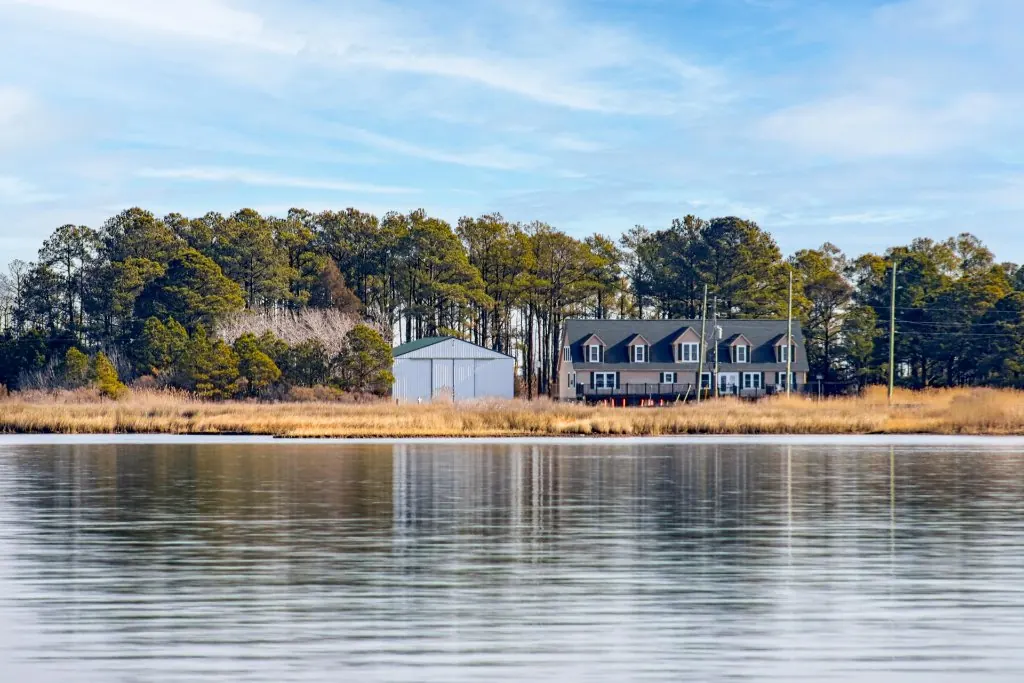
The Bayside Escape sits right in the marsh-and-water world the osprey calls home, on the Chesapeake Bay in Fishing Creek, MD. Create a free account and get $100 toward your first direct booking.
Where to watch — including from your couch
The best osprey watching is right out on the water: drift through the marsh guts in a kayak or scan from a dock and you'll spot them on nearly every marker. For a closer look — or a rainy afternoon — Blackwater National Wildlife Refuge runs live osprey nest cameras, including one along the Wildlife Drive, so you can watch a nest in real time. Pair a paddle looking for ospreys and terrapins with a refuge visit and you've got a full Chesapeake wildlife day.
If you're boating, keep your distance and watch your wake near nesting platforms — especially during nesting season — so adults can keep tending eggs and chicks undisturbed.
Quick answers
When do ospreys arrive on the Chesapeake Bay?
Ospreys return to the Bay in early March — the males usually a few days ahead of the females — and head south for the winter by fall, wintering as far away as the Caribbean and South America. Spring through late summer is prime osprey-watching season.
Why do ospreys nest on channel markers and platforms?
Ospreys need tall, safe perches near water, so they readily use man-made structures — channel markers, utility poles, duck blinds, buoys, and purpose-built nesting platforms. Conservation groups have placed hundreds of platforms around the Bay's tributaries.
Where can I watch ospreys near Hooper's Island?
Look up at channel markers and platforms from a kayak or off a dock, all around the marshes. Blackwater National Wildlife Refuge also runs live osprey nest cameras, so you can watch a nest up close even on a rainy day.