Spring Peepers: The Sleigh-Bell Sound of an Eastern Shore Spring
On the Eastern Shore, spring doesn't arrive with a fanfare of blossoms so much as with a sound. On a mild evening in early spring, from every wet ditch, pond edge, and low patch of woods, thousands of tiny frogs begin to sing at once — a high, ringing chorus that carries across the marsh like a field of sleigh bells. That's the spring peeper, and if you time a Hooper's Island trip to the shoulder of the season, it may be the most memorable sound of your stay.
A giant sound from a tiny frog
The spring peeper is a chorus frog barely bigger than a thumbnail — small enough to perch on a coin — and yet a full chorus of them can be almost deafening up close. Each male inflates a balloon-like throat pouch and produces a clear, high "peep" that rises slightly at the end, repeated over and over. Multiply that by hundreds or thousands of frogs calling to attract mates, and the individual peeps blur into a single shimmering wall of sound. It's the classic soundtrack of an early spring night across the eastern United States, and the low, wet landscape of Dorchester County is ideal peeper country.
When to hear the chorus
Peepers are one of the earliest signs of spring, often starting to call as the first genuinely mild evenings arrive and the temporary spring pools fill up. On the Eastern Shore that typically means late winter into spring — but the exact timing swings with the weather from year to year, so think of it as "when the first warm, damp evenings show up" rather than a fixed date on the calendar. A stretch of warm rain is often the trigger that gets the whole marsh singing. The chorus can continue for weeks as the season warms, gradually giving way to the other frogs of late spring and summer.
Where and how to listen
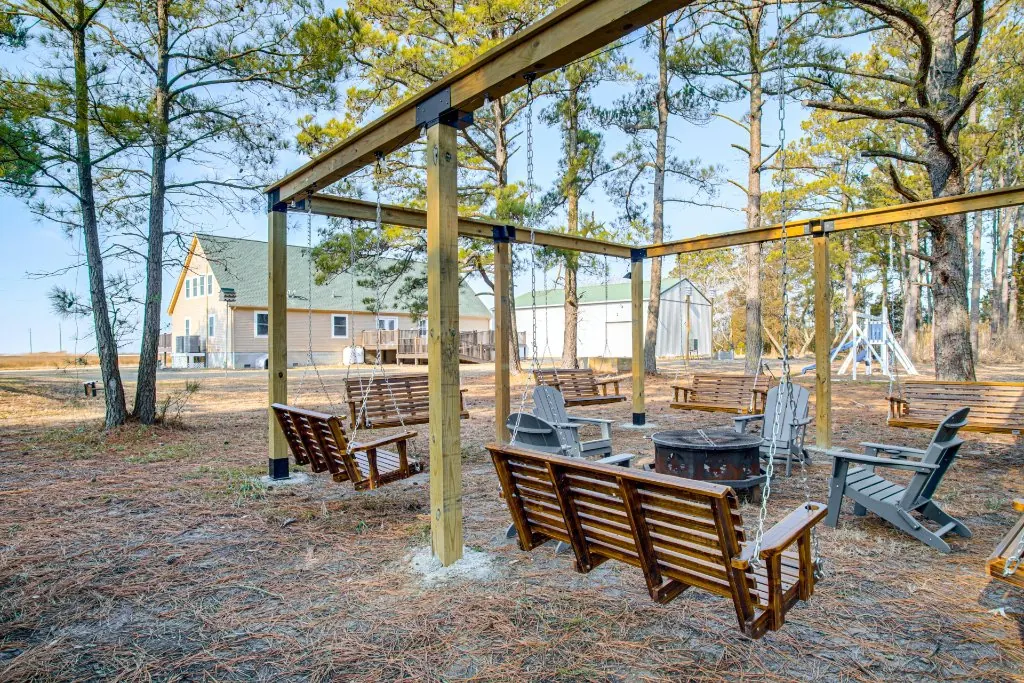
You rarely have to go looking — the sound comes to you. On a calm spring evening, step out onto the deck or the pergola after dark and just listen; peepers call from wet, marshy edges, roadside ditches, and low woods, all of which the island has in abundance. A few pointers make it even better:
- Go out at dusk or after dark — the chorus swells as the light fades and often peaks in the first hours of night.
- Pick a mild, still evening; cold snaps and strong wind quiet the frogs down.
- Try to actually spot one, and enjoy the challenge: peepers are ventriloquists, seeming to throw their voices, and they fall silent the instant you get close. A patient search with a flashlight near a calling pool is a great kids' mission — even if you strike out.
- Just soak it in. Some of the best "wildlife watching" on the Bay is done with your ears, and this is the purest example.
Get $100 toward your first booking
Create a free Bayside Rewards account and we'll drop $100 toward your first direct booking — sign in when you check out and the $100 comes off there. Then earn 8% back on every stay after that.
The rest of the spring frog cast
Peepers headline the early show, but they're not the only voices in the marsh. As spring deepens, you may hear the chorus frog, whose call is often compared to the sound of running a thumb along the teeth of a comb — a short, rising creak. Later, into the warmth of late spring and summer, listen for the green treefrog, a slim, bright-green frog with a nasal, honking "quonk" call that repeats through humid nights. Learning even a couple of these turns an ordinary evening outdoors into a layered concert, and gives kids a reason to hush and pay attention.
Why it's worth planning around
Spring is a quieter, gentler season on Hooper's Island — cooler days, fewer crowds, the marsh greening up — and the peeper chorus is one of its signature gifts. It costs nothing, needs no gear, and works even on an evening when the weather keeps you close to the house: just crack a window or step onto the deck. For a group looking for a lower-key, lower-cost time to gather on the Bay, an early-spring stay wrapped in the sound of a thousand tiny frogs is hard to beat. Come back in July for the crabs; come in spring for the song.