Snow Geese & Tundra Swans: Winter Birding at Blackwater
For a few months every winter, the marshes of Maryland's Eastern Shore become one of the great wildlife stages on the Atlantic coast. Tens of thousands of waterfowl pour into Blackwater National Wildlife Refuge to ride out the cold — and among them are the two birds that draw people from across the country: huge, swirling flocks of snow geese, and the elegant, far-carrying tundra swans. If you've never stood in the cold and watched thousands of white birds lift off a marsh at once, it's worth planning a trip around. Here's when to come, where to look, and how to photograph it — all within easy reach of The Bayside Escape on Hooper's Island.
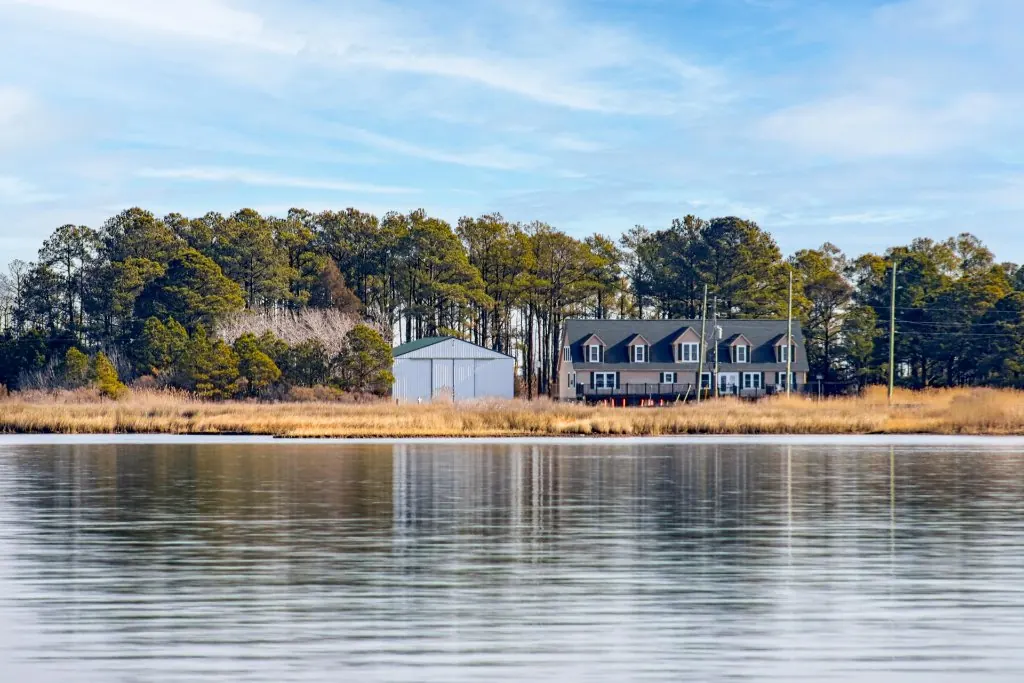
Why Blackwater Fills Up in Winter
Blackwater National Wildlife Refuge sits along the Atlantic Flyway, the great north–south migration corridor that funnels millions of birds down the eastern edge of the continent each fall. The refuge protects roughly 28,000 acres of tidal marsh, freshwater impoundments, and mixed forest near Cambridge — exactly the kind of shallow, food-rich wetland that wintering waterfowl need. When northern ponds and fields freeze over, the birds keep moving south until they find open water and forage. Blackwater is one of the places they stop.
The numbers are genuinely large. From late October onward, as many as 25,000 geese, ducks, and tundra swans arrive to spend the winter on and around the refuge. They concentrate where the food and shelter are best, which means that on a good day you can see thousands of birds from a single pull-off. It's not subtle — this is one of the few wildlife experiences where the spectacle finds you rather than the other way around.
When to Come: Mid-October to Mid-March
The wintering waterfowl season at Blackwater runs roughly from mid-October to mid-March. That's the window when the big flocks are present, and it brackets the experience nicely for trip planning.
The birds begin pouring in from late October. Numbers build quickly as northern wetlands freeze. By November the marshes are filling and the daily fly-outs become a reliable show.
Deep winter is prime time. Snow geese flocks are at their largest, tundra swans are well established, and a hard cold snap up north can push even more birds onto the refuge. Crisp light and bare trees also make for easier viewing.
Birds linger through February, then begin staging for the northbound trip. Late-season flocks can be active and vocal as restlessness builds. By mid-March most have moved on.
The best viewing within any given day tends to be early morning and late afternoon, when birds move between roosting water and feeding areas. A cold, clear, still morning after a front has passed is close to ideal — the air is sharp, the light is clean, and the birds are active.
Meet the Stars: Snow Geese and Tundra Swans
Snow Geese
- Blackwater is famous for huge flocks of wintering snow geese
- White bodies with black wingtips; some darker "blue morph" birds mix in
- Travel and feed in dense, restless flocks — the source of the classic "blizzard" liftoffs
- Loud, high, yelping calls carry a long way across open marsh
- The flock's collective movement is the real spectacle — watch the whole mass, not one bird
Tundra Swans
- Winter at Blackwater after nesting on the high Arctic tundra
- Large, all-white, with a long straight neck held upright
- Often in family groups; gray-tinged juveniles travel with white adults
- A soft, melodic, far-carrying call — quieter and more musical than geese
- Tend to favor open water and the edges of impoundments
You'll rarely see only these two. The same marshes hold large numbers of dabbling and diving ducks, plus Canada geese, so a winter visit is a chance to sort through a genuinely diverse waterfowl assemblage. And the supporting cast is excellent — see below.
The Spectacle: What a Liftoff Actually Looks Like
The moment people travel for is the mass liftoff. A flock of snow geese feeding on a marsh can number in the thousands, and when something spooks them — a passing eagle, a loud noise, or simply the collective decision to move — the entire flock rises at once. It looks like a snowstorm in reverse: a churning white cloud lifting off the brown marsh, accompanied by a wall of sound, before the birds wheel, settle, and drop back down somewhere nearby.
There's no schedule for it. Liftoffs happen when they happen, which is part of why patience pays. Find a flock, get comfortable, and wait. Bald eagles — abundant at Blackwater in winter — are a frequent trigger, so an eagle drifting over the marsh is often your cue to get ready. If you're lucky enough to be set up when several thousand birds go up at once, it's the kind of thing you don't forget.
Where to Watch: The Wildlife Drive and Beyond
The heart of a winter visit is the 3.6-mile Wildlife Drive, a one-way auto tour route that loops past prime marsh and impoundment habitat. The car works as a mobile blind — birds tolerate vehicles far better than people on foot — so you can stop at the pull-offs, scan from the window, and move on without flushing everything in sight. Drive slowly, keep your engine and doors quiet, and use the pull-offs rather than stopping in the travel lane.
Start at the visitor center, which is the right move for any first visit. The staff can tell you where the birds have been concentrating that week, and the center has live osprey and eagle cams plus orientation on the refuge's trails. From there, the refuge also offers walking and paddling trails for those who want to get out of the car, though in deep winter the Wildlife Drive is where the big-flock action usually is.
A few practical notes for cold-weather viewing: dress far warmer than you think you need to, because you'll be standing still in open wind off the marsh. Bring binoculars at minimum — a spotting scope is a real upgrade for distant flocks and swans on open water. And bring patience: the best sightings reward people who linger.
Make Hooper's Island your winter birding base
The Bayside Escape sleeps 24 in Fishing Creek, MD — about 19 miles from Blackwater NWR, with water views from the deck for off-refuge birding too. Create a free account and get $100 toward your first direct booking. Book direct and skip the platform fees.
Photography Tips for the Winter Flocks
Blackwater in winter is one of the most photogenic wildlife scenes on the East Coast, but white birds against bright marsh and sky present specific challenges. A few things help.
Reach matters — but so does the wide shot
A telephoto lens (300mm and up) lets you isolate individual swans or fill the frame with a packed flock. But don't ignore the wide angle: a mass liftoff is best told as a small slice of birds within a big landscape. Shoot both. The scale of the spectacle often reads better wide than tight.
Expose for the whites
Snow geese and tundra swans are bright white, and cameras tend to underexpose them into gray, or blow out the detail in their feathers. Watch your highlights, consider a small amount of positive exposure compensation in dull light, and aim to keep texture in the white plumage. Shooting in the softer light of early morning and late afternoon makes this far easier than harsh midday sun.
Fast shutter for liftoffs, slow for motion
To freeze a flock in flight, you want a fast shutter speed (1/1000s or faster) and continuous autofocus. If you want to convey the swirling chaos instead, a deliberately slower shutter can blur the wings into motion. Decide which story you're telling before the birds go up — there's no time once they do.
Shoot from the car, respect the birds
Use your vehicle as a blind on the Wildlife Drive. A beanbag or window mount steadies long lenses better than handholding in cold wind. Never approach or deliberately flush flocks to force a liftoff — it stresses the birds and ruins the experience for everyone else. The good liftoffs come to those who wait.
The Supporting Cast: Eagles, Herons, and More
The waterfowl get top billing, but a winter trip to Blackwater is a full birding day. The refuge supports one of the highest concentrations of nesting bald eagles on the Atlantic coast, and winter is superb for eagle viewing — you'll likely see several over the course of a drive. Great blue herons stalk the shallows year-round, and shorebirds work the mud edges. Keep an eye out, too, for the endangered Delmarva fox squirrel, a large, silvery squirrel that lives in the refuge's mature forest and is genuinely hard to find elsewhere.
In short: even on a slow day for liftoffs, there's plenty to see. Build in a full morning and let the refuge surprise you.
Planning Your Visit from Hooper's Island
Blackwater is roughly 19 miles from The Bayside Escape, an easy drive up the island and across to the refuge near Cambridge. That makes it a comfortable morning outing: leave the house early, catch the dawn movement, warm up at the visitor center, and be back at the house with the rest of the day to spare. With the house sleeping 24, a winter birding weekend works well for a club, a family group, or a few photographers chasing the same flocks.
Wildlife is wild — flock sizes, timing, and the exact location of the birds vary day to day and year to year. Check current refuge conditions, hours, and any Wildlife Drive closures with Blackwater National Wildlife Refuge before you go.