Beachcombing & Sea Glass on the Chesapeake: A Slow, Low-Tide Treasure Hunt
Some of the best hours of a Chesapeake trip cost nothing and ask nothing of you except that you slow down. Beachcombing is exactly that: a long, unhurried walk along a shoreline at low tide, eyes down, looking for whatever the Bay decided to leave behind. It is a wonderful way to fill a morning here on Hooper's Island — good for a solo wanderer, a couple, or a whole gaggle of kids who suddenly get very competitive about who found the prettiest shard of glass.
First, a note about where the water is
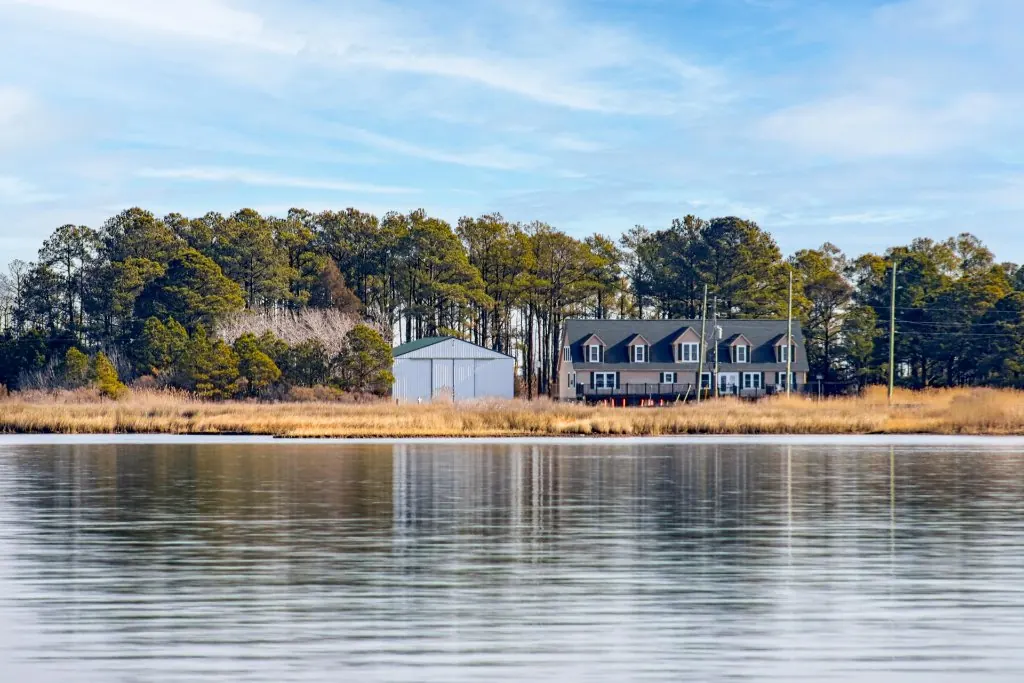
The Bayside Escape is a water-view home, not a waterfront one. From the front windows and the upstairs rooms you look out over a panorama of the Bay, watching cargo ships and sailboats drift across the horizon. To actually get your feet in the shallows, you walk across the road. That short walk is where a lot of the beachcombing here begins — along the public shoreline edge, where the tide sorts and re-sorts a ribbon of small treasures with every cycle.
Beyond that, Dorchester County is laced with pull-offs, road ends, and public shorelines. Some spots are public and welcoming; some are private and clearly posted. The simple rule that keeps everyone happy: comb where it's clearly public, and never cross onto posted private land or someone's yard to reach the water.
What you actually find on a Bay beach
The Chesapeake is not a wild ocean surf, so its beaches read differently than the Atlantic side of Delmarva. You are less likely to find big shells and more likely to find the small, patient rewards of a working estuary:
- Sea glass — bits of old bottle glass tumbled smooth and frosted by years of sand and current. Clear, brown, and green are the everyday colors; blues and other shades turn up far less often, which is exactly why finding one feels like a small victory.
- Shells — oyster and clam shells, ribbed mussel shells from the marsh edge, the occasional whelk or moon-snail fragment. Nothing here is exotic, but a bleached oyster shell is a fine, honest souvenir of a working Bay.
- Driftwood and marsh wrack — smoothed sticks, weathered wood, and the tangled line of dried grass, feathers and seed pods the high tide leaves behind. The wrack line is where the good stuff collects, so walk it slowly.
- Bay glass "in progress" — sharper, only partly frosted pieces. A good beachcomber leaves these; they are not done yet, and the Bay will finish them.
Time it with the tide
Beachcombing lives and dies by the tide. Low tide, and the hour or two on either side of it, exposes the most shoreline and the most freshly sorted material — a wider band of sand and wrack to walk. High tide narrows everything and hides the good gravel. Before you head out, glance at a tide chart for the Hooper's Island / Honga River area (a quick phone search does it), and aim your walk for the low. Mornings after a blowy day or an overnight storm can be especially productive, because wind and waves stir the bottom and toss new material up the beach.
A few small comforts make the walk better: shoes you don't mind getting wet, a little cloth bag or old container for your finds, and sun protection. Sea nettles (the Bay's summer jellyfish) can drift in on warm mid-to-late-summer tides, so if you're wading, keep an eye on the water. And in high summer, go early — the light is kinder and the beach is yours.

The "take only photos" ethic
Here is where beachcombing asks you to be a good guest of the Bay. A frosted piece of sea glass or a common shell from a public shoreline is a fair keepsake. But there are places and things to leave exactly as you found them:
- Protected land is look-only. On refuges and protected shorelines — Blackwater National Wildlife Refuge is 19 miles up the road — the ethic (and often the rule) is take only photographs and leave only footprints. Collecting is generally not allowed. When in doubt, photograph it and move on.
- Leave living things where they live. A shell with a creature still in it, a horseshoe crab, a hermit crab in a whelk shell — these are alive and should stay. Flip a stranded horseshoe crab back over if you find one upside down; that small kindness genuinely helps.
- Don't dig up the marsh. The Spartina grass and its roots hold the shoreline together. Walk the sand and the wrack line, not the living marsh.
None of this dulls the fun. If anything, it sharpens it — a photo of a heron working the shallows or a single perfect blue shard, backlit in your palm, tends to outlast a pocketful of ordinary shells anyway.
Get $100 toward your first booking
Create a free Bayside Rewards account and we'll drop $100 toward your first direct booking — sign in when you check out and the $100 comes off there. Then earn 8% back on every stay after that.
Make it a whole slow morning
The nicest version of this isn't a mission — it's a rhythm. Brew a pot in the kitchen (the Hamilton Beach two-way maker will handle ground coffee or a K-Cup emptied into the mesh basket), carry a mug down to the shoreline, and just wander. Kids can turn it into a scavenger contest: most colors, biggest driftwood, best-frosted piece. Grown-ups can turn it into nothing at all, which is rather the point of Hooper's Island.
Come back with your handful of finds and lay them out on the picnic table or the pergola rail to dry. It's a small, satisfying collection — proof of a morning spent looking closely at a quiet corner of the Chesapeake. Then wander back in for breakfast, and let the tide reset the beach for tomorrow.