Stand-Up Paddleboarding on Hooper's Island: Calm, Protected Water for Beginners
Stand-up paddleboarding looks harder than it is — and the water around Hooper's Island is about as forgiving a place to learn as you'll find on the Chesapeake. The narrow, marsh-sheltered channels here stay calm and glassy far more often than the open Bay, which makes for a low-stress first stand, a relaxed glide, and a whole new way to see the herons and the grass at eye level. Here's how to do it well, and safely.
Bring your own board or rent one
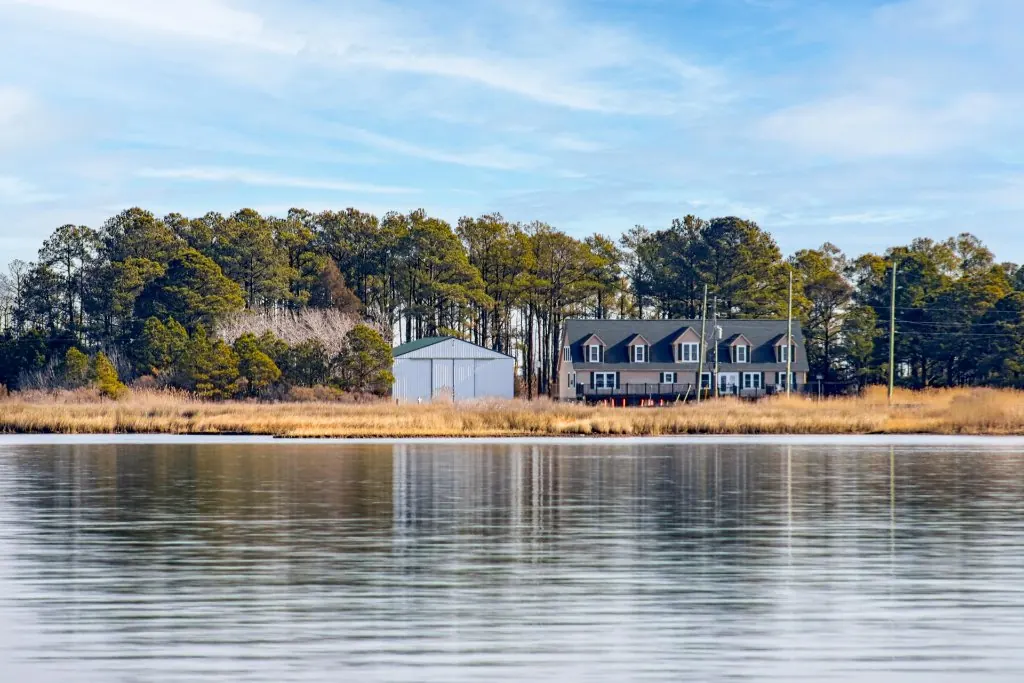
To be clear from the start: the house doesn't supply paddleboards, kayaks or any watercraft. You'll bring your own or rent from an outfitter. If you own boards, hauling them out is easy here — the ten-car driveway takes a trailer or roof rack without a fuss, and the Flex Barn can even be driven into to stow gear overnight and out of the weather. Inflatable SUPs are especially travel-friendly if you're flying or tight on car space. Prefer to rent? Line it up before your trip; rental availability and hours around the Eastern Shore vary, so reserve ahead and confirm.
Why the guts are perfect for learning
Hooper's Island is threaded with "guts" — the local name for the tidal creeks that wind through the Spartina marsh. Tucked behind the grass and land, they're sheltered from most wind and stay noticeably calmer than the open water, which is exactly what a new paddleboarder wants. On a still morning the surface can be mirror-flat. That calm does a lot of work for you:
- Standing up is easier on flat water than on chop, so beginners find their balance faster and fall in less.
- You can go slow. The guts reward drifting and looking, not sprinting — perfect for soaking in the marsh and the birds.
- The wildlife is close. From a board you're quiet and low, and herons, egrets and ospreys often let you glide surprisingly near before they lift off.
Beginner tips for your first stand
A few pointers turn a wobbly start into a confident glide:
- Start on your knees. Paddle kneeling first to get a feel for the board, then rise to your feet once you're moving and comfortable.
- Feet parallel, hips-width apart, centered over the middle of the board — not too far forward or back.
- Eyes on the horizon, not your feet. Looking up steadies your balance far more than staring down does.
- Bend the knees and stay loose. A soft, athletic stance absorbs little wobbles; a stiff, locked one amplifies them.
- Expect to fall in — and aim to fall away from the board into the water, not onto it. It's part of the fun on a warm day, and the leash keeps your board from drifting off.
Safety: tides, wind and your PFD
Calm water still deserves respect, and standing up makes you more exposed to wind than sitting in a kayak does. Cover these basics every time:
- Wear a PFD and a leash. A properly fitted life jacket — on, not stashed — plus a leash tethering you to your board are the two pieces of gear that matter most. The board is your biggest flotation; the leash keeps it with you.
- Respect the wind. A standing paddler catches wind like a sail. If it's breezy, stay in the sheltered guts and off open water, and always paddle into the wind on the way out so it helps you home when you're tired.
- Read the tide. The guts are tidal and can run shallow or push a current. Check a tide chart for the Honga River / Hooper's Island area and plan around it so you're not fighting the flow or grounding on a flat.
- Watch the water in summer. Sea nettles (jellyfish) can drift in on warm mid-to-late-summer tides, so keep an eye out if you're likely to fall in.
- Tell someone your plan. Let a person at the house know your route and return time. On a remote island, that habit is simply smart.
Get $100 toward your first booking
Create a free Bayside Rewards account and we'll drop $100 toward your first direct booking — sign in when you check out and the $100 comes off there. Then earn 8% back on every stay after that.
The best times to paddle
Early morning is the paddleboarder's golden hour — the wind is usually lightest, the water most likely to be glass, and the marsh is waking up around you. Evening, as the breeze lays down toward sunset, is the other sweet spot, and the light is unbeatable. Midday can get breezier and hotter, so if you're out then, keep to the shade of the shoreline and stay hydrated.
The boat ramp is only a few minutes' drive from the house, so it's easy to slip out for a dawn paddle and be back for a big group breakfast. Whether you're chasing a workout, a quiet float, or just the novelty of standing on the Chesapeake, the calm guts of Hooper's Island are a genuinely lovely place to do it.