The Owls of Hooper's Island: A Listener's Guide to the Night
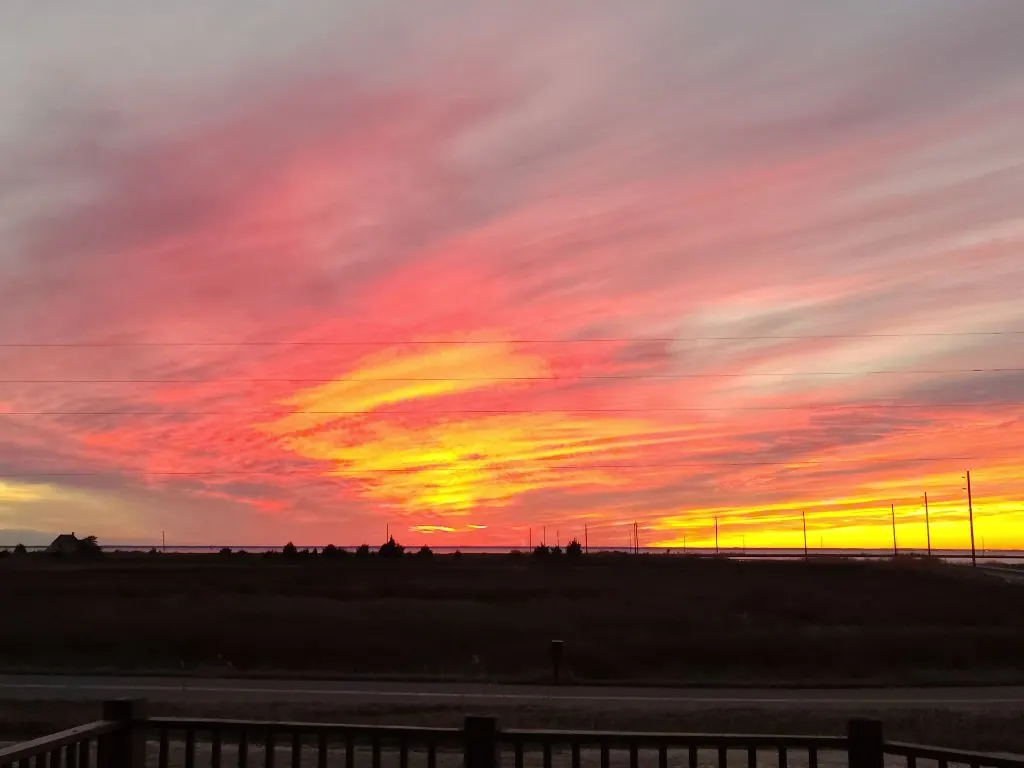
Step onto the front deck after the last light drains out of the western sky, let your ears settle, and Hooper's Island starts to talk. There are no highways out here, no glow of a nearby city — just wind, water, and, on many nights, the deep and unhurried voices of owls. Learning to name them by sound is one of the quiet pleasures of a stay on a dark, rural island, and it costs nothing but a little patience.
Why owls love a place like this
Owls need two things a busy suburb rarely offers: dark, undisturbed woodland edges to nest and roost in, and open ground to hunt over. Hooper's Island — a string of low islands stitched with marsh, tree lines, and quiet yards — supplies both. The mix of loblolly pines, marsh, and open field at the edge of the Bay is prime hunting country for a bird that finds its dinner by ear. And because the island is genuinely dark and genuinely quiet, their calls carry a long way. You may not see the owl that's calling — they're masters of staying hidden — but you'll almost certainly hear one if you give it time. Consider owl-listening a "you may hear," never a guarantee; some nights the woods stay silent, and that's part of the fun of trying again tomorrow.
The three you're most likely to hear
Maryland's Eastern Shore hosts several owl species, but three are the ones most people learn first because their voices are so distinct. Each has a signature you can lock into memory after a night or two of practice.
- Great horned owl — the classic, storybook hoot: a low, soft, rhythmic series often described as "hoo-hoo-hoooo, hoo-hoo." It's deep and resonant, the kind of sound you feel as much as hear. Great horned owls are large, powerful, and widespread, and a mated pair will sometimes duet back and forth, the male's voice a touch lower than the female's.
- Eastern screech-owl — despite the name, it doesn't screech. Its two common calls are a soft, descending whinny (like a tiny horse) and an even-pitched trill that quavers on one note. This is a small owl that often calls from right around a yard's tree line, so it can sound surprisingly close.
- Barred owl — the most conversational of the three. Its famous phrase is often remembered as"who cooks for you, who cooks for you-all?" Barred owls are vocal and expressive, and a pair can work themselves into a rowdy, cackling, monkey-like racket that's startling the first time you hear it and delightful once you know what it is.
A simple way to tell them apart
You don't need to be a birder to sort these out. Focus on rhythm and pitch. If it's a slow, deep, evenly spaced set of hoots — think of a foghorn with a stutter — you're probably hearing a great horned owl. If it's a tremulous little whinny or a soft one-note trill that seems to come from a nearby tree, that's a screech-owl. And if it sounds like a phrase, a question with a distinct up-and-down shape ("who cooks for you?"), you've got a barred owl. When in doubt, just listen for a while — owls tend to repeat themselves, and the pattern usually becomes clear after two or three rounds.
When and where to listen
The best listening window opens at dusk and runs into full dark, with a second flurry of activity before dawn. Owls call year-round, but late fall through late winter tends to be especially vocal as pairs establish and defend territory — a great horned owl's deep hooting on a cold, still January night carries beautifully. Warm summer evenings can be productive too, when a slow after-dinner hour on the deck lines up perfectly with the island going quiet.
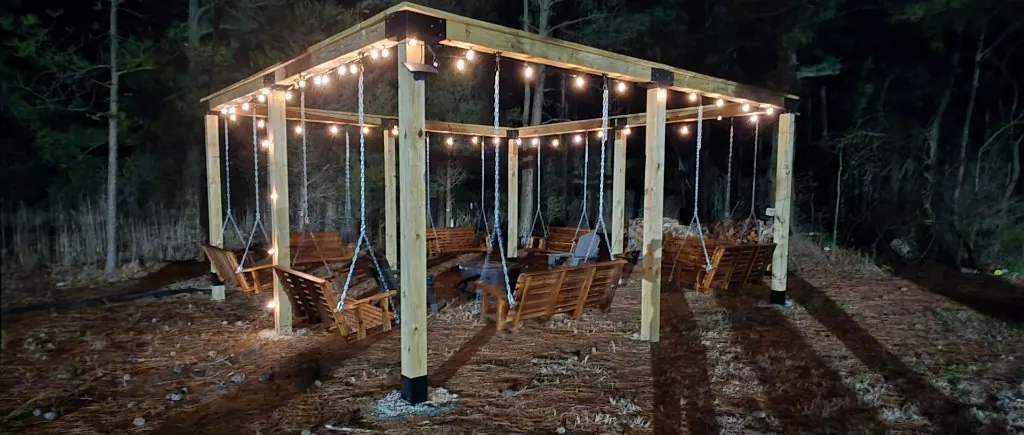
For the best odds, pick a calm night, dim the porch lights, and simply wait. The lighted pergola out back is a lovely place to settle in with something warm; leave a few lamps off so your ears — and eyes — can adjust to the dark. A pair of binoculars won't help much (you're hunting with your ears), but a red-filtered flashlight lets you move around without wrecking your night vision.
Get $100 toward your first booking
Create a free Bayside Rewards account and we'll drop $100 toward your first direct booking — sign in when you check out and the $100 comes off there. Then earn 8% back on every stay after that.
Listen well, and leave them be
A few gentle habits keep this a good experience for the owls and for you. Resist the urge to blast recorded owl calls from your phone to lure a response; playback can stress birds and pull them away from real business like hunting for their young, and wildlife biologists generally discourage it, especially during nesting season. You don't need it anyway — real owls, on their own schedule, are far more satisfying. Keep noise and bright light to a minimum, and let the island do what it does best after dark.
Make a small ritual of it
Owl-listening is the kind of thing a big group can share without much effort. Bundle the kids up for ten quiet minutes before bed and challenge them to be the first to hear a "who cooks for you." Keep a running tally on the fridge of which species the house heard each night. It's a free, screen-free, weather-tolerant activity that turns an ordinary evening on the deck into a small adventure — and it's a reminder of exactly why a dark, quiet island is worth the drive.