Muskrat: An Eastern Shore Food Tradition (and a Show to Match)
Some foods tell you where you are. On Maryland's lower Eastern Shore, muskrat is one of them — a marsh tradition that most of America has never heard of, but that has quietly fed Dorchester County's watermen and trappers for generations. You don't have to want to try it to find it fascinating; it's a window into how people here have lived off the boot-sucking marsh for a very long time. Here's a curious, respectful look at the tradition, and the wonderfully unusual show that celebrates it.
Why muskrat, and why here
Dorchester County is mostly marsh — tens of thousands of acres of it — and the muskrat is one of the marsh's most abundant residents, a small aquatic rodent that builds dome-shaped lodges out of reeds. For the trapping families who worked these wetlands, the muskrat was a double resource: the pelt was sold in the fur trade, and the meat went on the family table. Nothing was wasted. That combination — a winter fur economy plus a food that came free with the work — is why muskrat became a genuine local dish here rather than a novelty. It's often called "marsh rabbit" on menus and in kitchens, a gentler name for a food with deep roots in these communities.
How it's traditionally prepared
This is honest country cooking, not fine dining. Muskrat is a dark, rich, gamey meat, and it's usually treated the way you'd treat any tough, flavorful game: prepared carefully and then cooked long and slow — parboiled or braised, stewed with onions, seasoned assertively — until it's tender. Cooks who grew up with it have their own methods and swear by them, and it's the kind of dish tied to family and place as much as to flavor. If you're curious, the respectful move is to try it where it's made by people who know it, rather than to experiment. And if it's not for you, that's fine too — plenty of locals feel the same.

The National Outdoor Show
If you want to see this heritage out in the open, the place is the National Outdoor Show, held in the Church Creek / Golden Hill area of Dorchester County — a reasonable drive from Hooper's Island. It's typically a February event, and it has run for decades as a celebration of the region's trapping, waterman, and outdoor culture. The headline attraction is the World Championship Muskrat Skinning Contest — exactly what it sounds like, a timed test of a genuine marsh skill — alongside pageants (Miss Outdoors and more), and a roster of old-time contests like log sawing, trap setting, and duck, goose, and turkey calling. Traditionally, muskrat is served on-site for the curious to sample. It is, without exaggeration, one of the most authentic and quirky slices of Chesapeake culture you can witness.
One important caveat: dates, venue, hours, and events change year to year. Treat "February" as a general window, not a promise, and check the current year's schedule before planning a trip around it.
Get $100 toward your first booking
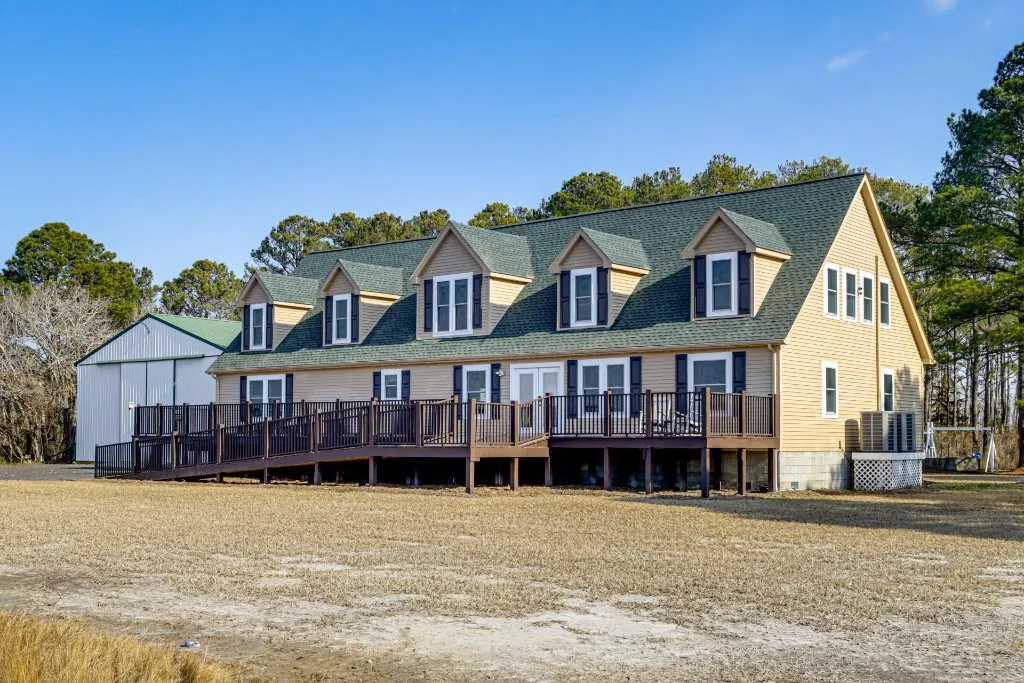
The Bayside Escape sleeps 24 on the Chesapeake Bay in Fishing Creek, MD — a warm, quiet base in the heart of Dorchester's marsh country. Create a free account and get $100 toward your first direct booking.
A respectful way to take it in
However you feel about eating muskrat, it's worth approaching the tradition with curiosity rather than a raised eyebrow. This is a food and a set of skills born from generations of people living directly off a hard, beautiful landscape — the same marshes you'll be looking at from the house, the same wetlands that ripple out toward Blackwater. Understanding muskrat is really understanding the Eastern Shore: self-reliant, tied to the water and the seasons, and quietly proud of ways of living that the rest of the country never learned. Even if you never take a bite, knowing the story makes the marsh outside your window a little deeper.
Where it fits in a Dorchester trip
A winter visit is the natural time to brush up against this side of the Shore — cold, quiet, waterfowl overhead, and the marsh at its starkest. Pair a curiosity about the outdoor-show tradition with a drive out to Blackwater National Wildlife Refuge (about 19 miles) to see the living marsh that produced it, and you've got a day that goes well beyond the usual tourist beat. It's the kind of thing that turns a beach-house rental into an actual encounter with a place.