Meteor Showers Over Dark Island Skies
Everyone remembers their first meteor shower — that gasp when a streak of light rips silently across the sky and everyone lying in the grass points at once. What most people don't realize is that you need almost nothing to see one: no telescope, no app, no expertise. You need a dark sky and a little patience. Hooper's Island, with its genuinely dark rural nights and wide-open horizons over the water, is one of the better places within a few hours of the city to look up and be amazed.
What a meteor shower actually is
A meteor shower isn't stars falling — it's Earth plowing through a trail of dust and debris left behind by a comet (or, in one case, an asteroid). As our planet passes through that stream each year at the same time, those tiny bits of grit hit the upper atmosphere at tremendous speed and burn up in a flash. Because Earth crosses the same debris trails on roughly the same dates annually, the major showers are predictable to within a night or two. That's why the same famous names come around every year, and why you can plan a trip loosely around them.
The showers worth planning around
Several meteor showers recur each year, but a couple are the reliable crowd-pleasers. A note on timing: peak dates shift slightly from year to year, and the single best "peak night" is what really matters — so always check the current year's peak before you commit. As a general guide:
- The Perseids — the beloved summer shower, active in mid-to-late summer and peaking around mid-August. Warm nights and a generous rate of bright meteors make this the most popular one to watch, and it lines up beautifully with a summer stay on the Bay.
- The Geminids — often the richest shower of the year, peaking around mid-December. It's cold, but the sky is crisp and the show can be spectacular for anyone willing to bundle up.
- Others through the year — showers such as the Lyrids in spring and the Orionids in autumn round out the calendar. None are guaranteed to dazzle on a given night, but each offers a reason to look up. Check the year's forecast for peak dates and expected rates.
How to watch (it's gloriously low-tech)
Meteor-watching is the rare bit of astronomy where gear actively gets in the way — binoculars and telescopes narrow your view, and meteors can appear anywhere in the sky. Here's the whole method:
- Get comfortable and look up. Lie back on a blanket, a lounger, or a reclining chair so you can watch a big swath of sky without craning your neck.
- Let your eyes dark-adapt — fully. It takes a solid 20–30 minutes in the dark for your eyes to reach peak sensitivity, and one glance at a bright phone screen resets the clock. Keep screens off or use a dim red light.
- Kill the lights. Turn off porch and yard lights. The darker your surroundings, the more meteors you'll catch — this is where a dark island shines.
- Be patient and take in the whole sky. Meteors come in fits and starts; you might see nothing for ten minutes, then three in a row. Don't stare at one spot — relax your gaze wide.
- Aim for the dark hours. Many showers are best after midnight and toward the pre-dawn hours, and a night with little or no moon dramatically improves the view.
Get $100 toward your first booking
Create a free Bayside Rewards account and we'll drop $100 toward your first direct booking — sign in when you check out and the $100 comes off there. Then earn 8% back on every stay after that.
Why the island helps
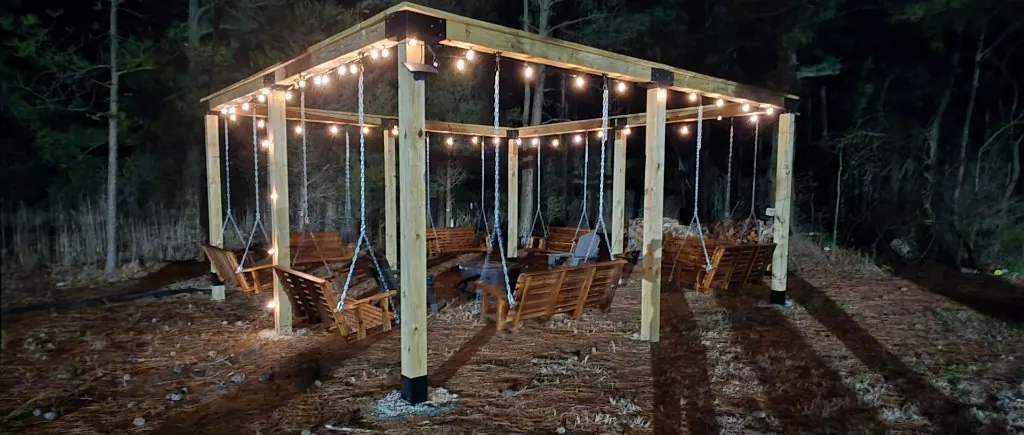
The single biggest factor in how many meteors you see is how dark your sky is, and that's exactly what a remote Chesapeake island offers. Away from the light domes of Baltimore, Washington, and the suburbs, the night sky here is deep and full, and the open views over the water give you an unobstructed horizon. Set up in the yard or under the pergola, let the group get quiet, and the dark does the rest. It's worth stepping well away from any lit windows or the glow of the house for the best result.
Make a night of it
A meteor shower is a wonderful excuse to gather everyone outside after dark. Lay out blankets and loungers, bring mugs of something warm (or cold, in August), and turn it into a shared vigil — count the streaks out loud, wish on the bright ones, let the kids stay up past bedtime for something they'll remember. Come prepared for the season: bug spray and light layers in summer, serious warm layers and blankets in December. And keep your expectations honest — some nights are quiet, clouds happen, and the moon doesn't always cooperate. But under a truly dark Hooper's Island sky, on the right night, looking up is one of the best free shows the Bay has to offer.