The Plants That Build the Marsh: Loblolly, Spartina & More
From the deck, the marsh reads as one great sweep of grass. Walk its edges, though, and you start to notice it's a community — a handful of tough, specialized plants, each with its own job, that together build the land, hold it against the tides, and feed an entire web of Bay life. Learning to name a few of them turns a shoreline stroll into something richer, and gives kids and grown-ups alike a reason to look closely. Here's a friendly field guide to the plants that make the Hooper's Island marsh what it is.
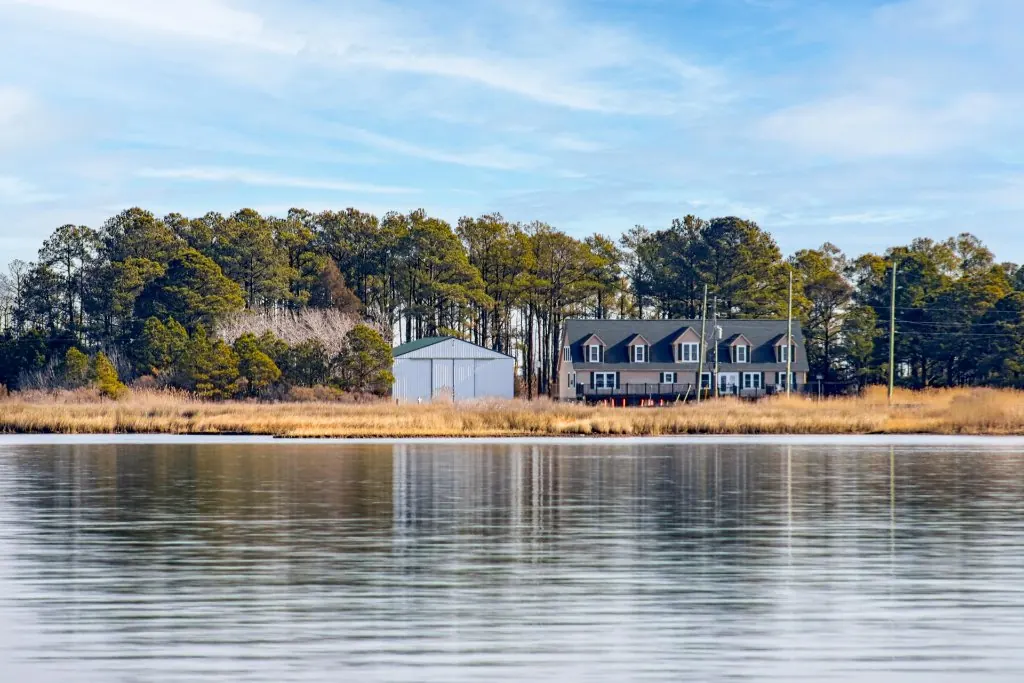
Spartina: the grass that makes the marsh
If one plant defines a Chesapeake salt marsh, it's Spartina — the cordgrasses. These are the tall, dense green grasses that carpet the tidal flats and line the creeks, thriving in salty, waterlogged ground where almost nothing else can grow. Spartina is a true ecosystem engineer: its roots bind the mud and slow erosion, its stems soften waves and trap sediment (literally helping to build new marsh), and its decaying leaves fuel the food web that feeds crabs, fish, and birds. When it turns gold and copper in autumn, it paints the whole landscape. To ID it, look for broad expanses of upright grass growing right down into the intertidal zone, greenest in summer and often bending in graceful unison with the wind.
Loblolly pine: the tree of the high ground
Rising behind the marsh, wherever the ground lifts just enough to escape the salt, stands the loblolly pine — the signature tree of the Eastern Shore's coastal forests. Tall and straight, with long needles bundled in threes and large, prickly cones, loblollies form the dark tree lines that frame so many Bay views. They favor the sandy, sometimes soggy soils of the coastal plain and can grow surprisingly fast. Those pine-fringed edges are where the land transitions from open marsh to forest, and they're prime habitat for owls, songbirds, and the Delmarva fox squirrel found in this part of Maryland. Where you see the marsh give way to a wall of tall pines, you're looking at that boundary between water-world and woods.
The shrubs and flowers of the marsh edge
Between the cordgrass flats and the pine woods lives a band of hardy shrubs and wildflowers worth knowing:
- Wax myrtle (bayberry) — a rounded, semi-evergreen shrub with narrow, aromatic leaves; crush a leaf and it gives off a pleasant bayberry scent. It tolerates salt spray and often forms dense thickets along the marsh's upland edge, and its waxy berries are important winter food for birds.
- Marsh mallow — a tall wetland plant that puts up soft, pale-pink, hibiscus-like flowers in the warmer months, a lovely splash of color against the green. (Yes, it's a relative of the plant that historically lent its name to the confection.) Look for its showy blooms in damp, brackish ground in mid-to-late summer.
- Groundsel bush and other salt-tolerant shrubs — several woody plants ring the high-tide line, stabilizing the transition zone. Even without naming each one, notice how the vegetation changes in bands as the ground rises away from the water — a whole zonation shaped by exactly how much salt each plant can stand.
Get $100 toward your first booking
Create a free Bayside Rewards account and we'll drop $100 toward your first direct booking — sign in when you check out and the $100 comes off there. Then earn 8% back on every stay after that.
Phragmites: the invader to know
Not every tall grass in the marsh is a friend. Phragmites (common reed) is a towering, aggressive plant — often well over head height — topped in late summer and fall by big, feathery, purplish-to-tan seed plumes. An invasive variety has spread widely through Chesapeake wetlands, where it can crowd out native plants like Spartina, form dense single-species stands, and reduce the habitat value of a marsh for wildlife. You'll learn to spot it by its sheer height and those showy plumes standing above everything else. It's a useful one to recognize precisely because it tells a story about the pressures facing these wetlands — and why the native marsh plants are worth protecting.
Turning a walk into a field lesson
You don't need to be a botanist to enjoy this. On a stroll along the shoreline or a slow drive out toward Blackwater National Wildlife Refuge (about 19 miles away), try naming just three plants: the cordgrass in the flats, the pines on the high ground, and the tall plumed phragmites. Give a wax myrtle leaf a gentle crush for its scent. Point out to the kids how the plants change as the ground rises from water to woods. It's a simple, satisfying way to understand why the marsh is so much more than "just grass" — and why this low, green edge of the Bay is such a productive, living place. Look, don't pick: leave the plants for the next walker and for the wildlife that depends on them.
Why the marsh matters
These plants aren't just scenery — they're infrastructure. Spartina roots hold the shoreline together and buffer storms; the whole marsh filters water, stores carbon, and nurses the young crabs and fish that make the Chesapeake famous. When you understand that the golden grass out your window is doing all that work, the view deepens. A Hooper's Island stay puts you right at the heart of one of the Bay's great living systems, close enough to walk its edges and learn its parts — a quiet kind of education that comes free with the scenery.