Horseshoe Crabs of the Chesapeake: Ancient, Harmless & Worth Flipping Over
Find a horseshoe crab plowing along a Chesapeake shoreline and you're looking at one of the oldest designs on Earth — a creature whose ancestors were crawling the seafloor hundreds of millions of years before the dinosaurs. They look faintly prehistoric because they are. And despite the spike and the armor, they're completely harmless. Here's what these living fossils are, why they matter far beyond the beach, and the single most useful thing you can do if you meet one stranded on its back.
Not a crab at all
For all the name, a horseshoe crab isn't really a crab — it's more closely related to spiders and scorpions, an arachnid cousin marooned in the sea. That helmet-shaped shell is a shield, not a weapon. The long, pointed tail (the telson) looks menacing but is used mainly as a lever to right themselves when a wave tumbles them over; it doesn't sting. Underneath, they're a shuffle of legs and gently working gills. You can watch one for a long time and never be in any danger — they have no interest in you and no way to hurt you.
The late-spring spawning run
The best time to see them is late May into June, when adults come ashore to spawn. The peak often lines up with the high tides around the full and new moons, and much of the action happens after dark. On the biggest nights, on the right beaches around the Delmarva Peninsula, you can find dozens of them at the water's edge — larger females plowing up the sand to lay eggs, with smaller males clustered around. It's an ancient ritual playing out on a modern shoreline, and it's free to anyone willing to walk the beach at the right tide.
Encouragingly, Maryland's Department of Natural Resources reported in 2026 that horseshoe crab populations in the region have recovered — good news for a species with a lot of jobs to do.
Why they matter more than they look
A horseshoe crab is a keystone that props up two very different worlds. First, wildlife:
- Fuel for a global migration. Their tiny green eggs, laid by the millions, are the fuel that migrating shorebirds — most famously the threatened red knot — gorge on to power the next leg of a journey that can stretch toward the Arctic. Some birds nearly double their body weight on horseshoe crab eggs.
- A gift to medicine. Horseshoe crabs have unusual blue blood containing a compound so sensitive to bacterial contamination that it's used to test that vaccines, injectable drugs, and medical devices are safe. Crabs are collected, bled, and returned to the water. There's a decent chance a horseshoe crab has quietly helped keep a medicine you've taken safe.
A shoreline full of small wonders
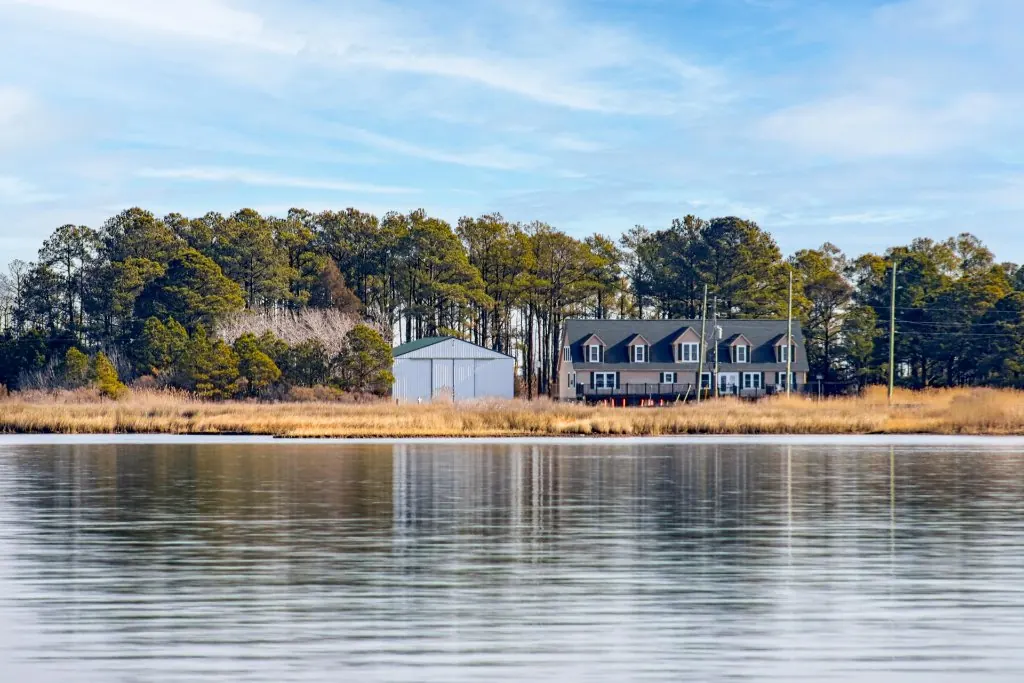
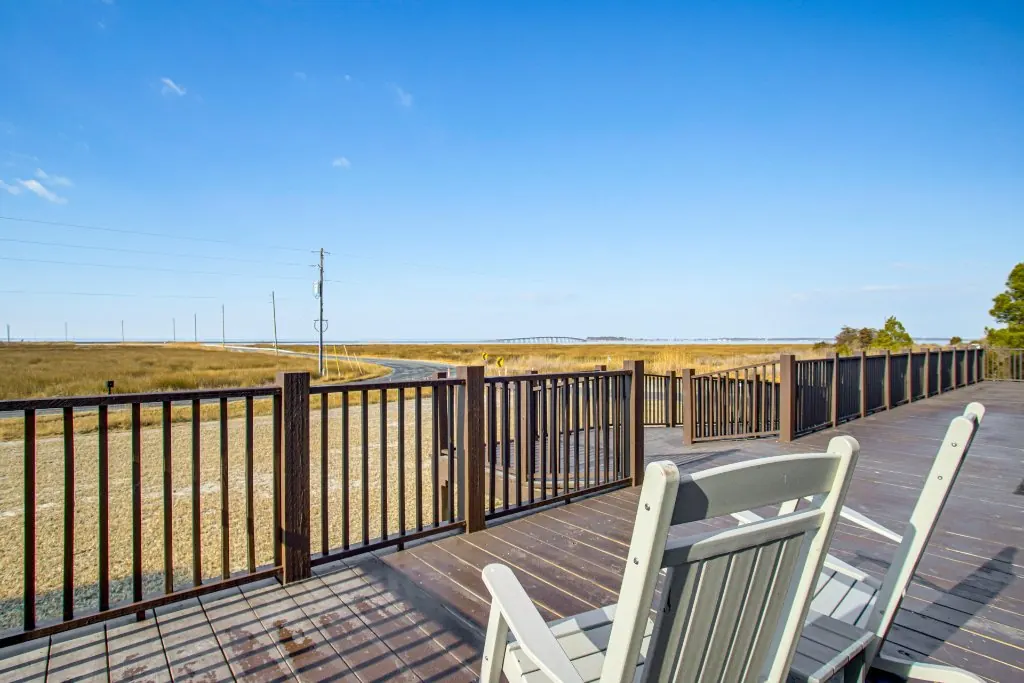
The Bayside Escape sits on Hooper's Island in Fishing Creek, MD — walk across the road to the water and see what the tide brings in. Create a free account and get $100 toward your first direct booking.
The one thing to do: flip them back over
Here's the easiest good deed on the beach. Horseshoe crabs frequently get flipped onto their backs by waves, and a stranded crab, legs waving at the sky, can't always right itself — leaving it at the mercy of the sun and the gulls. If you find one upside down, gently pick it up by the sides of the shell (never by the tail, which can hurt the animal) and set it back down the right way, facing the water. That's it. On a big spawning night, a family walking the wrack line can rescue dozens. It's a small, concrete way to help a species that quietly helps so much.
Watching well
If you're lucky enough to catch a spawning night, watch by the light of the moon or a dim red flashlight rather than a bright white beam, keep dogs leashed and off the crabs, and let the animals do their thing undisturbed. Take photos, count how many you can find, and turn the strandees over — but leave the beach exactly as you found it. These are ambassadors from deep time. The least we can do is give them room.