The Harriet Tubman Underground Railroad Byway: A Visitor's Guide from Hooper's Island
Harriet Tubman was born enslaved in Dorchester County, Maryland — the same county that holds Hooper's Island and Fishing Creek. The marshes, rivers, and back roads she knew as a child are still here, and many of the places tied to her life and to the Underground Railroad are open to visitors today. This guide explains the history with care, walks you through the State Park and Visitor Center, highlights the key stops along the self-guided Byway, and helps you plan a thoughtful day from The Bayside Escape.
Who Harriet Tubman Was
Harriet Tubman was born into slavery in Dorchester County, Maryland, in the early 1820s, and spent her childhood and young adulthood enslaved on the marshy lowlands of the Eastern Shore. She escaped to freedom in Pennsylvania, and then — at enormous personal risk — returned to Maryland again and again to guide family members and others out of bondage along the Underground Railroad, the network of secret routes and safe houses used by enslaved people seeking freedom.
She is rightly remembered as one of the most courageous figures in American history: a conductor on the Underground Railroad, a scout and nurse during the Civil War, and later an advocate for civil rights and women's suffrage. What's easy to miss from a distance is how local her early story is. The woods, fields, and tidal creeks of Dorchester County were her first landscape — the place she learned to read the land, move quietly, and survive. When you drive these roads, you're moving through the geography of her life.
Why the Eastern Shore Landscape Matters
The Dorchester County of Tubman's childhood was a working landscape of timber, farms, and waterways. Enslaved people labored in the fields and forests, cut timber, and worked the rivers — and that same terrain shaped how escape was even possible. The dense woods offered cover. The tidal rivers and the network of waterways offered both barriers and routes. Knowledge of the land was a form of power.
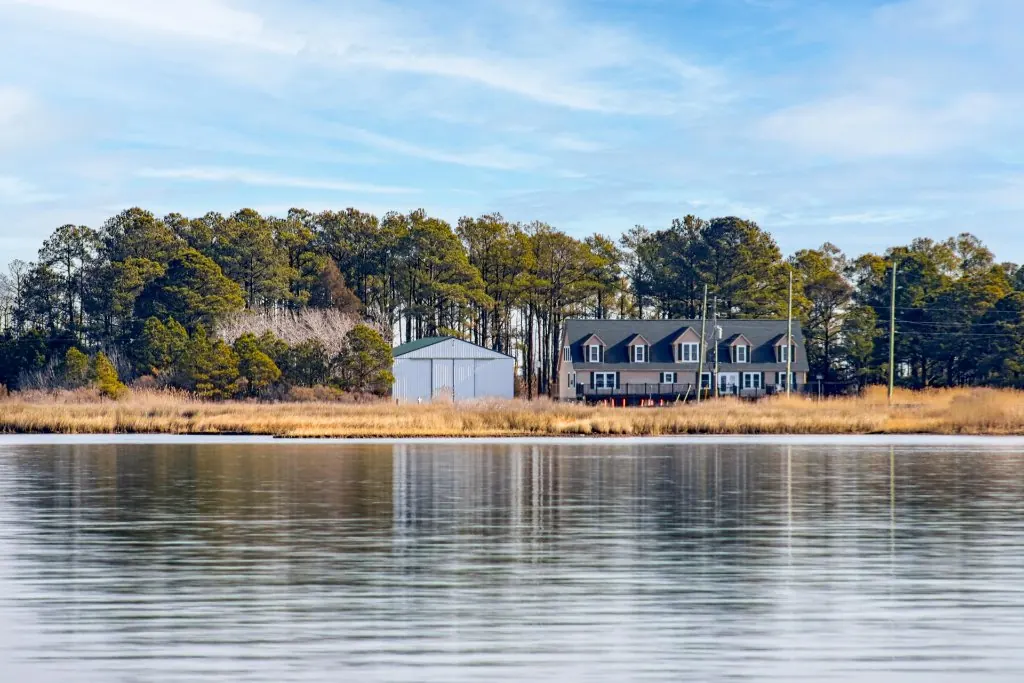
Visiting the area gives that history a physical reality that no textbook can. The flat, marshy expanses near Blackwater National Wildlife Refuge look much as they did generations ago. Standing in that quiet — the same big sky, the same water and reeds — is part of what makes a visit meaningful rather than abstract. Approach it that way: not as a checklist of attractions, but as time spent in a place where extraordinary history happened.
Start Here: The State Park & Visitor Center
The natural starting point for any visit is the Harriet Tubman Underground Railroad State Park & Visitor Center, located near Blackwater National Wildlife Refuge and roughly 18 miles from The Bayside Escape — about a 30-minute drive. The Visitor Center is free to enter, and it's the place to ground yourself before heading out onto the Byway.
Inside, exhibits trace Tubman's life from her childhood in Dorchester County through her work on the Underground Railroad and beyond, set against the history of slavery and resistance on the Eastern Shore. The center is thoughtfully designed and works for a range of ages, though the subject matter is heavy — there's real value in letting children (and adults) move through it at their own pace.
Practical notes: confirm current hours before you go, since they can vary by season and day of the week. Plan at least an hour or two here. The center also has restrooms, parking, and grounds to walk, and it's the best single place to pick up an official map and orientation for the larger driving route. Because it sits next to Blackwater, it pairs naturally with a refuge visit on the same day.
Understanding the Byway
The Harriet Tubman Underground Railroad Byway is a self-guided driving route — not a single building or a guided tour, but a string of more than 30 sites spread across the Eastern Shore, connected by quiet country roads. It traces places associated with Tubman's life and with the broader story of the Underground Railroad in the region.
Because it's self-guided and spread out, the Byway rewards a little planning. You will not see all 30-plus sites in a day, and you shouldn't try. Pick a handful that resonate, give them time, and treat the drive itself — the marshes, the small towns, the open sky — as part of the experience. Many sites are markers, landscapes, or churches rather than staffed attractions, so the meaning comes from context, which is why starting at the Visitor Center matters.
Visit with respect
Many Byway stops are working churches, private property, cemeteries, or active communities. Be quiet and respectful, stay on public roads and designated areas, don't trespass, and follow all posted signage. You're a guest in places that carry deep significance for the descendants of the people who lived this history.
Key Stops to Anchor Your Day
Use the official Byway map for exact locations and the full list, but these themes help you choose where to focus:
The Visitor Center & State Park
Your orientation point and the only stop with full exhibits. Start here so the landscape stops along the rest of the route have meaning.
Blackwater National Wildlife Refuge
Adjacent to the Visitor Center, the refuge preserves the kind of marsh-and-woods landscape Tubman knew. It doubles as a wildlife stop and as a way to experience the terrain of the era.
Bucktown & the rural landscape
The Bucktown area is tied to Tubman's youth, including the well-known story of the head injury she suffered as a young woman. The surrounding back roads convey the isolation and scale of the rural Eastern Shore.
Churches, markers & community sites
Several stops are historic churches and interpretive markers that connect to the faith, families, and resistance networks of the time. Many remain active places of worship — visit accordingly.
Cambridge connections
The town of Cambridge holds additional civil rights and African American heritage sites and makes a natural lunch and museum stop. See our Cambridge day-trip guide for details.
Stay where the history happened
The Bayside Escape sleeps 24 in Fishing Creek — about 18 miles from the Harriet Tubman Visitor Center and right in the heart of Dorchester County. Create a free Bayside Rewards account and get $100 toward your first direct booking — sign in when you check out and it comes off there. Book direct and skip the platform service fees.
How to Plan the Day from Hooper's Island
Hooper's Island is an ideal base for this kind of trip. The Visitor Center is a short, scenic drive away, and the whole route stays within Dorchester County and the surrounding Eastern Shore. Here's a realistic, unhurried plan:
Drive from The Bayside Escape to the Harriet Tubman Underground Railroad State Park & Visitor Center (about 18 miles). Spend an hour or two with the exhibits. Pick up the official Byway map and choose 3–4 stops.
Walk or drive into Blackwater National Wildlife Refuge next door to experience the marsh landscape — and watch for eagles, herons, and waterfowl depending on the season.
Continue to a few chosen Byway stops in the surrounding countryside, or drive on to Cambridge for lunch and its heritage and maritime sites.
Finish a final stop or two, then head back to Hooper's Island. Decompress on the deck — heavy history is worth sitting with quietly.
A few practical tips: cell service can be spotty on the back roads, so download or print your map ahead of time. Bring water and snacks, since services are sparse between the main stops. Wear comfortable shoes for short walks at outdoor sites. And build in margin — the point isn't to rush between markers but to give the places room to land.
A Note on Visiting Thoughtfully
This is heritage tourism centered on the history of slavery, resistance, and one woman's extraordinary courage. It's worth visiting precisely because that history is hard. Take it seriously: read the interpretive material, talk with your family about what you're seeing, and give the sites the quiet attention they deserve. The Byway exists to keep this story alive and accurate — and visitors who come with respect help do exactly that.
Hours, site access, and route details can change. Confirm current information and pick up the official Byway map at the Harriet Tubman Underground Railroad State Park & Visitor Center, and follow all posted guidance at individual sites before your visit.