Firefly Evenings on the Eastern Shore: A Screen-Free Summer Ritual
There's a particular kind of magic that only happens after the sun goes down in a place with no streetlights: the yard fills, slowly, with drifting sparks of gold. Fireflies — lightning bugs, if you grew up calling them that — are one of the great free shows of an Eastern Shore summer, and out on Hooper's Island, where the skies are genuinely dark, they can be spectacular. Here's how to make a firefly evening the highlight of the trip, especially for the kids.
What you're actually watching
Fireflies aren't flies at all — they're beetles, and the glow is a small chemical miracle called bioluminescence, produced in the tip of the abdomen with almost no wasted heat. Those blinking lights are a language: males flash a species-specific pattern as they cruise, and females answer from the grass, a courtship conversation written in cold light. Different species flash differently, which is why on a good night the yard can seem to pulse in more than one rhythm at once. It's biology, and it's also, undeniably, enchanting.
When to watch: June and July, after dusk
Firefly season on the Eastern Shore runs mainly through June and July, with warm, humid evenings the best of all. The show doesn't start at sunset — it builds in the half-hour or so after, as true dark settles in, and often peaks in the first hour or two of night. Look toward the edges of the yard, along the tree line and over taller grass and the marsh, where fireflies tend to gather. A still, muggy evening after a warm day is prime. A cold snap or a stiff wind will quiet things down.
Why the dark island helps
Fireflies depend on being able to see each other's flashes, so light pollution genuinely dims the show — porch lights and headlights wash out the very signals they're trying to send. This is where a remote spot shines, literally. Hooper's Island has very dark rural skies, the same darkness that makes the stargazing so good here, and it lets even faint firefly flashes stand out. For the best effect, kill the outdoor lights, let your eyes adjust for ten minutes, and simply sit and watch the dark fill in with gold.
Dark skies, a big yard, and warm summer nights
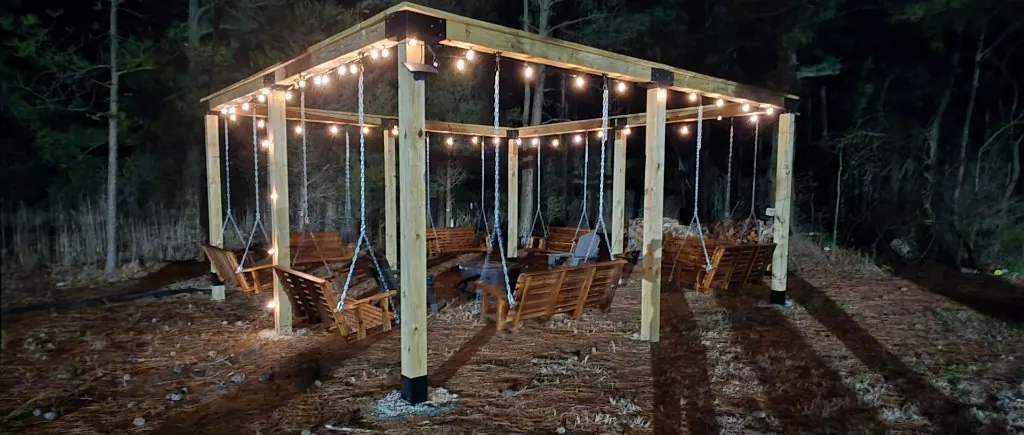
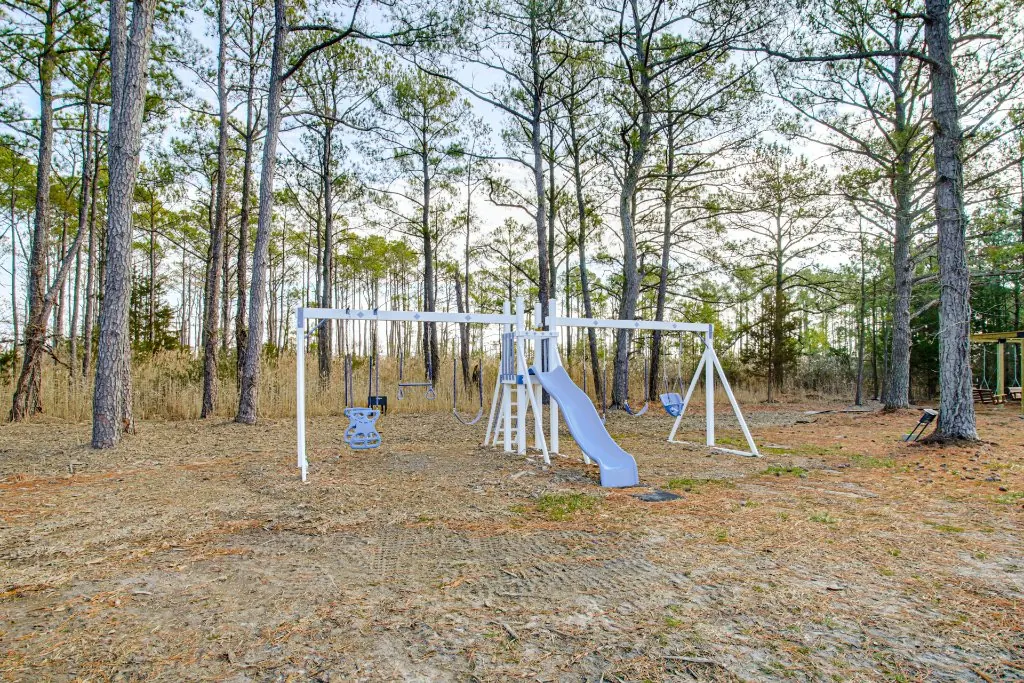
The Bayside Escape sits on 1.2 rural acres on the Chesapeake in Fishing Creek, MD, with a lighted pergola for the grown-ups and plenty of dark grass for the kids to chase fireflies. Create a free account and get $100 toward your first direct booking.
A gentle catch-and-release for kids
Catching fireflies is a rite of passage, and it can be done kindly. A few simple rules keep it a good memory for everyone, bugs included:
- Use cupped hands or a clear jar with air holes and a blade of damp grass inside. Scoop gently — fireflies are soft and easily hurt.
- Keep them briefly. A few minutes to admire the glow up close is plenty. A jar is a lantern, not a home.
- Let them all go before bed, in the same yard you caught them. Every firefly released is one more flashing for a mate tomorrow night.
- Skip the bug spray on catching hands, and never squash a firefly to "keep" the glow — the light only lives while the beetle does.
A screen-free hour worth protecting
The best thing about a firefly evening is what it isn't: it isn't a screen, it isn't scheduled, and it costs nothing. Pour something cold, settle the grown-ups at the pergola, and turn the kids loose in the dark grass with a jar. Fireflies are also quiet indicators of a healthy landscape, and they've grown scarcer in many developed places — which makes a yard still full of them, under a truly dark sky, a small gift worth savoring while it glows.