Beaten Biscuits: The Eastern Shore's Little Loaf with a Colonial Past
If you order a "biscuit" on the Eastern Shore expecting the fluffy, buttery Southern kind, a beaten biscuit will surprise you. It's small, hard, pale, and dense — closer to a cross between a cracker and a dinner roll than to a soft biscuit — and it carries a genuinely colonial history in its knuckle-like crust. Beaten biscuits are one of those heritage foods that tell you something about how people ate here long before modern conveniences. Here's the story, how they're traditionally enjoyed, and why they're worth a curious taste.
What exactly is a beaten biscuit?
A beaten biscuit is a small, unleavened biscuit made from a stiff, plain dough — essentially flour, a little fat, salt, and liquid, with no baking powder, baking soda, or yeast to make it rise. Because there's no leavening, the dough gets its lift and its distinctive texture a different way entirely: by being beaten. That physical working of the dough folds in tiny air pockets and develops the gluten, producing a biscuit that's hard and dense on the outside with a slightly flaky, dry interior. They're typically little — a couple of bites — pale rather than golden, and often marked with a few fork-holes on top. The name is completely literal.
The colonial past — beaten by hand, then by machine
Beaten biscuits date back to a time before chemical leaveners were common, when cooks needed bread that would keep. To make them, the stiff dough was traditionally beaten by hand for a long stretch — folded and struck over and over with a mallet, a rolling pin, the flat of an axe, or a special wooden bench, sometimes for half an hour or more. It was hard, repetitive labor, historically part of the demanding kitchen work on Chesapeake farms and, in the era of slavery, work often forced upon enslaved cooks — a heritage worth remembering honestly. In later years, hand-beating gave way to a hand-cranked biscuit machine or "biscuit brake" with rollers that did the same job, and a few of these old machines are still treasured on the Shore. The upside of all that effort: because they're dry and dense, beaten biscuits keep far longer than a soft biscuit, which is exactly why they endured.

How they're eaten — country ham is the classic
The traditional and near-perfect pairing is country ham. A beaten biscuit is split and filled with a thin slice of salty, cured Maryland or Virginia country ham, and the match is genius: the dense, plain, slightly dry biscuit is the ideal foil for the intense, salty richness of the ham. You'll see little ham-stuffed beaten biscuits passed around at holidays, receptions, and gatherings across the Eastern Shore — they're a beloved party and sideboard food precisely because they're sturdy, poppable, and don't go soggy. Beyond ham, people enjoy them simply with butter, or with a bit of jam or honey to play against the salt. They are emphatically not a soft, gravy-soaking Southern biscuit; approach them on their own terms and they're a real pleasure.
Get $100 toward your first booking
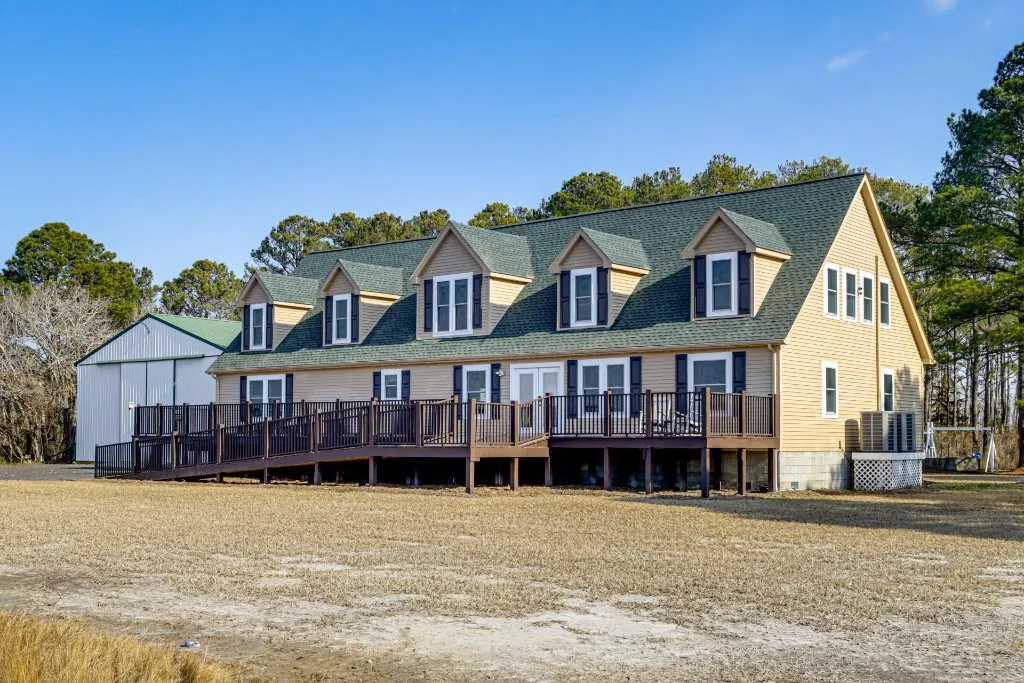
The Bayside Escape sleeps 24 on the Chesapeake Bay in Fishing Creek, MD — a full kitchen and a full breakfast room to spread out a heritage-food tasting for the whole group. Create a free account and get $100 toward your first direct booking.
Where the tradition lives on
Beaten biscuits are increasingly a special-occasion and heritage item rather than everyday grocery fare, so finding them takes a little curiosity. Your best bets are local bakeries, farm markets, specialty and country stores, and holiday or church gatherings around Dorchester and the wider Eastern Shore — and the friendliest approach is simply to ask a local where to get good ones. Because availability comes and goes and small makers keep their own schedules, ask around and don't count on finding them on any given day. If you do get your hands on a bag, do the full ritual: split them, tuck in a sliver of country ham, and set them out for the group. It's a small, edible piece of Chesapeake history, and it makes a great story at the table.
A taste of the old Shore
Part of the fun of a trip out here is bumping into the ways things used to be done — the deadrise workboats, the marsh trapping, and yes, a biscuit that people once beat by hand for half an hour because that's what it took. You don't have to love beaten biscuits to appreciate them; they're a direct, chewable link to the Eastern Shore's frugal, hard-working past. Try one with country ham at least once. Like a lot of the best things down here, it rewards a little patience and an open mind.