Bats Over the Bay: The Dusk Show From the Deck
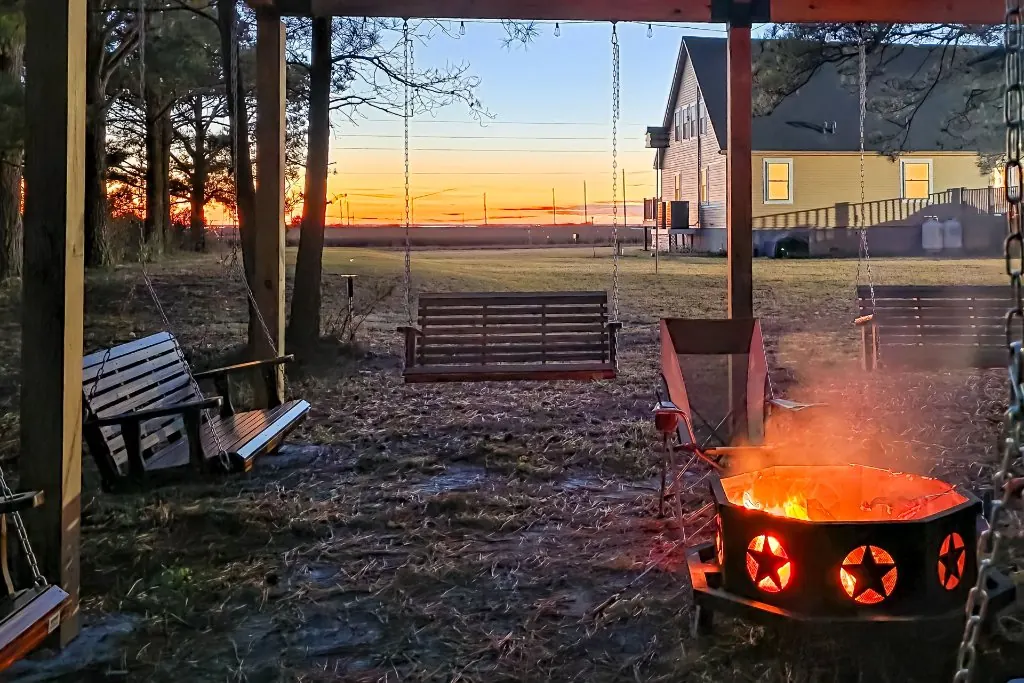
There's a magic hour on a summer evening — the sun gone, the sky still glowing peach and lavender, the fire pit just catching — when the first bat flickers across the yard. Then another. Soon a handful of them are stitching loops over the grass and out toward the water, and you realize the real evening show has begun. Watching bats from the deck is one of the most underrated pleasures of a warm night on Hooper's Island, and once you know what you're seeing, you'll look forward to it.
What's flickering over the yard
The small, fast-flapping shapes zig-zagging over the lawn at dusk are almost certainly bats, not birds. Birds tend to fly in smoother, more direct lines; bats flutter and jink, changing direction sharply as they chase individual insects. Maryland is home to several bat species, and among the ones long associated with the region are the big brown bat and the little brown bat — both insect-eaters that emerge at twilight to feed. You won't get a good look at field marks in the low light, and that's fine. The joy here is in the motion: the way a bat can turn on a dime, the sense of a whole aerial economy playing out just above your head.
Free, tireless mosquito control
Here's the practical reason to love them. Insect-eating bats are voracious hunters of the very bugs that pester you on a summer night, and they eat a lot of them. They hunt by echolocation — firing out rapid pulses of sound (too high for us to hear) and reading the echoes to pinpoint a moth or a mosquito in total darkness. Every bat working your yard at dusk is quietly making your evening on the deck more pleasant. It's one of nature's better trades: you get a light show, and the marsh's mosquito population gets a little smaller.
None of this replaces a good bug spray on a still, buggy evening — the General Store about five miles up the road stocks it if you forget — but it's a genuine, if modest, assist. And it's a nice thing to point out to skeptical kids: those aren't scary creatures, they're on your side.
Harmless — and worth a fair word
Bats have an undeserved spooky reputation. The truth is that a bat hunting over your yard has zero interest in you; it's laser-focused on insects and will steer around a person effortlessly. They aren't swooping at you — they're chasing a bug that happened to be near you. Simple common sense covers the rest: never handle a bat with bare hands, and if one somehow gets indoors, open a window or door and let it find its own way out rather than trying to catch it. Give them that basic respect and there's nothing to fear and a lot to enjoy.
A hard chapter worth knowing about
If bats seem less abundant than they once were in some places, there's a reason. A disease called white-nose syndrome, caused by a cold-loving fungus, has killed enormous numbers of hibernating bats across eastern North America since it appeared in the late 2000s, hitting little brown bats especially hard. It's a sobering piece of context and part of why every bat you see doing its job over the marsh is worth appreciating. Watching them isn't just entertainment; it's a small act of paying attention to a group of animals that's had a rough couple of decades.

Get $100 toward your first booking
Create a free Bayside Rewards account and we'll drop $100 toward your first direct booking — sign in when you check out and the $100 comes off there. Then earn 8% back on every stay after that.
How to catch the show
You don't need any gear — just timing and a comfortable seat. A few tips to make the most of it:
- Head out about 20–30 minutes before full dark, when bats are just starting to emerge and there's still enough sky-glow to see them against.
- Settle where the yard meets open space — near the fire pit or under the pergola — so you're watching the open air where bats hunt.
- Look up and toward the lighter part of the sky; silhouettes are easiest to spot against the last of the sunset.
- Give it patience. Numbers build as it gets darker, and a still, warm, insect-rich evening will always put on the best show.
Part of a bigger dusk
The nice thing about the bat hour is that it doesn't happen in isolation. It overlaps with fireflies rising off the grass in early summer, with the first owl beginning to call from the tree line, and with the deep quiet that settles over a dark island once the day is done. Grab a chair, let the fire pit crackle, and let the evening unfold on its own schedule. On Hooper's Island, the show after sunset is free — and it's often the best part of the day.